
If you’re preparing for a new job, enrolling in a healthcare program, or renewing a certification, you’ve probably come across both CPR certification and Basic Life Support (BLS) certification. At first glance, they may seem like the same thing. After all, both teach life-saving skills and involve CPR. However, they are not interchangeable.
One of the most common questions students ask is, “Is BLS certification the same as CPR?” The short answer is no. While BLS includes CPR training, it also covers additional skills that healthcare professionals need when responding to medical emergencies.
Choosing the right course is important. Taking a CPR class when your employer requires BLS could mean having to complete another course later. On the other hand, enrolling in BLS when you only need a general CPR certification may be more training than necessary.
In this guide, we’ll explain the differences between CPR and BLS certification, what each course includes, who should take them, and how to decide which one is right for you in Maryland.
What Is CPR Certification?
CPR certification teaches people how to respond when someone experiences a cardiac emergency, stops breathing, or begins choking. The goal is to help keep blood and oxygen flowing through the body until emergency medical services arrive.
A typical CPR course covers essential life-saving skills, including:
- Adult CPR
- Child CPR
- Infant CPR
- How to use an Automated External Defibrillator (AED)
- Relief of choking in adults, children, and infants
- Recognizing life-threatening emergencies
- Calling 911 and providing emergency assistance
These courses are intended for both first-time learners and those renewing an existing certification. They are commonly required by employers and are also valuable for anyone who wants to be prepared for emergencies at home, work, or in the community.
People who often take CPR certification include:
- Teachers
- Childcare providers
- Coaches
- Personal trainers
- Security personnel
- Workplace employees
- Parents and caregivers
- Volunteers
CPR certification provides the knowledge and confidence to respond quickly before professional medical help arrives.
What Is BLS Certification?
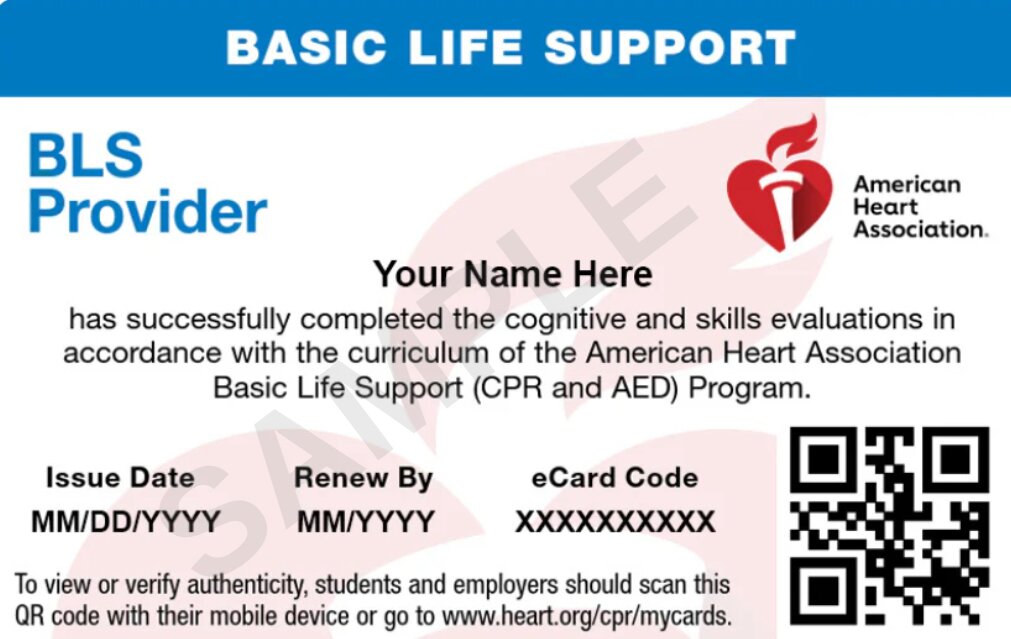
Basic Life Support (BLS) is a more comprehensive course that includes CPR while introducing additional skills used in healthcare settings.
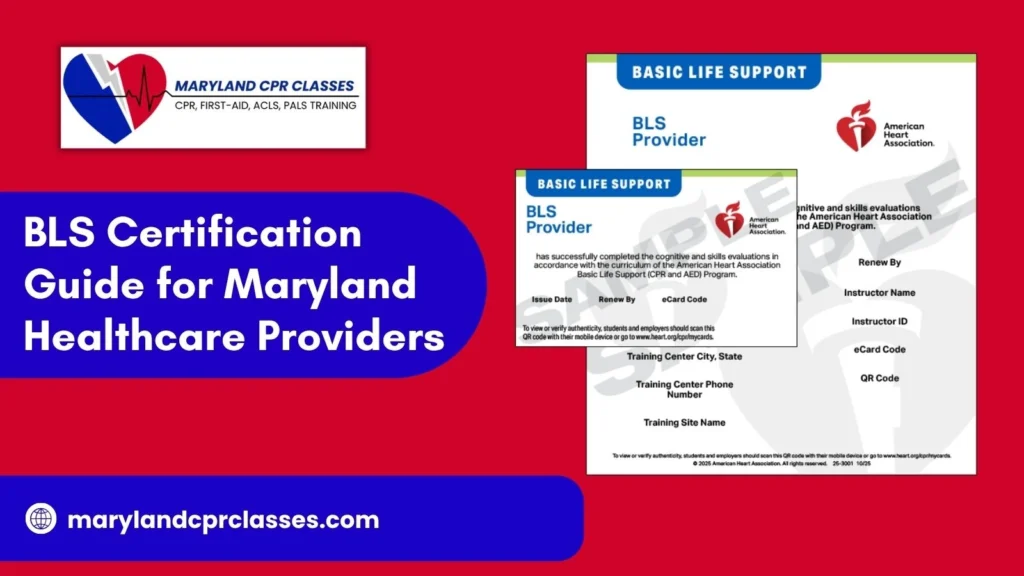
BLS certification follows the latest American Heart Association (AHA) guidelines and prepares healthcare professionals to respond effectively during cardiac and respiratory emergencies.
In addition to CPR and AED use, BLS training covers topics such as:
- High-quality CPR for adults, children, and infants
- Two-rescuer CPR techniques
- Team-based emergency response
- Bag-mask ventilation
- Effective communication during resuscitation
- Rapid assessment of a patient in cardiac arrest
These skills are especially important in hospitals, clinics, ambulances, and other healthcare environments where multiple providers work together during an emergency.
BLS certification is commonly required for:
- Registered nurses
- Physicians
- EMTs
- Paramedics
- Medical assistants
- Dental professionals
- Respiratory therapists
- Nursing students
- Medical students
- Other healthcare providers
Many employers in Maryland require BLS certification before employees begin patient care or clinical training.
Is BLS Certification the Same as CPR?
No. BLS certification is not the same as CPR certification.
The easiest way to understand the difference is to think of CPR as the foundation of BLS training.
CPR certification focuses on the basic skills needed to respond to cardiac arrest and choking emergencies. It teaches participants how to perform chest compressions, provide rescue breaths when appropriate, and use an AED safely.
BLS certification includes all of those CPR skills but goes further by preparing healthcare providers to manage emergencies as part of a medical team. Students learn additional techniques used in clinical settings, including coordinated team response, bag-mask ventilation, and more advanced patient assessment.
Although the courses share many similarities, they are intended for different audiences.
If you are a teacher, coach, parent, or office employee, a CPR certification course may meet your needs.
If you work in healthcare or are entering a medical profession, your employer or school will often require BLS certification instead.
Understanding this difference can help you register for the correct course the first time.
BLS vs. CPR: What’s the Difference?
The easiest way to compare the two courses is to look at what they are intended to accomplish.
| CPR Certification | BLS Certification |
| Intended for the general public and many workplaces | Intended for healthcare professionals and healthcare students |
| Teaches CPR, AED use, and choking relief | Includes CPR, AED use, plus advanced healthcare skills |
| Focuses on single-rescuer response | Covers both single-rescuer and team-based response |
| Suitable for workplaces, schools, and community settings | Used in hospitals, clinics, EMS, and other healthcare environments |
| Meets many workplace CPR requirements | Often required by healthcare employers and licensing programs |
Although both courses teach CPR, the additional training included in BLS prepares healthcare providers to work efficiently during medical emergencies where teamwork and clinical skills are essential.
What Skills Are Taught in CPR Certification?
CPR certification focuses on the essential skills needed to respond to common life-threatening emergencies until emergency medical services arrive. These skills can help anyone provide immediate care during the first few critical minutes of an emergency.
Most American Heart Association CPR courses include training on:
- Recognizing the signs of cardiac arrest
- Checking if a person is responsive and breathing normally
- Calling 911 or activating the emergency response system
- Performing high-quality CPR for adults
- Performing CPR for children and infants
- Using an Automated External Defibrillator (AED)
- Helping a choking adult, child, or infant
- Continuing care until emergency responders take over
The course emphasizes recognizing emergencies quickly and taking action with confidence. Because these skills are useful in many everyday situations, CPR certification is recommended for people in a wide range of professions and for anyone who wants to be prepared to help others.
What Additional Skills Are Included in BLS Certification?
BLS certification builds on the CPR skills taught in a standard CPR course by introducing techniques used in healthcare settings.
Healthcare providers often work alongside other medical professionals during emergencies, so BLS training includes both individual and team-based response techniques.
Some of the additional topics covered in BLS certification include:
High-Quality CPR
Students learn how to deliver chest compressions that meet current American Heart Association guidelines, including proper compression depth, rate, and chest recoil.
Two-Rescuer CPR
Unlike many standard CPR courses, BLS teaches participants how to perform CPR efficiently with another trained rescuer. Students learn how to coordinate compressions, ventilation, and AED use while minimizing interruptions.
Team Dynamics
Effective communication is essential during medical emergencies. BLS training teaches healthcare providers how to work together, assign responsibilities, and provide coordinated patient care.
Bag-Mask Ventilation
Healthcare professionals often use a bag-mask device to assist patients who are not breathing adequately. BLS courses provide instruction on proper ventilation techniques using this equipment.
Rapid Patient Assessment
Students learn how to quickly identify cardiac arrest, activate the emergency response system, and begin appropriate treatment without unnecessary delays.
These additional skills prepare healthcare professionals for situations they are more likely to encounter in hospitals, clinics, ambulances, and other medical environments.
Who Needs CPR Certification?
CPR certification is suitable for anyone who wants to learn how to respond during a cardiac emergency.
Many employers require CPR certification because employees may be responsible for assisting coworkers, customers, students, or members of the public until emergency responders arrive.
People who commonly need CPR certification include:
- Teachers
- Childcare providers
- Coaches
- Fitness instructors
- Personal trainers
- Security officers
- Construction workers
- Office employees
- Hospitality staff
- Camp counselors
- Lifeguards
- Parents and grandparents
- Volunteers
Even if your job doesn’t require CPR certification, learning these skills can help you respond confidently if someone experiences a medical emergency at home or in your community.
Who Needs BLS Certification?
BLS certification is primarily intended for healthcare professionals and students entering the medical field.
Many hospitals, healthcare facilities, and educational programs require BLS certification before employees or students begin working with patients.
People who commonly need BLS certification include:
- Registered nurses
- Licensed practical nurses (LPNs)
- Physicians
- Physician assistants
- EMTs
- Paramedics
- Medical assistants
- Respiratory therapists
- Dental professionals
- Nursing students
- Medical students
- Pharmacy students
- Physical therapists
- Occupational therapists
- Hospital employees
If you’re unsure which course you need, check with your employer, licensing board, or school before registering.
Which Certification Should Maryland Students Choose?
The right certification depends on why you need training.
Here are a few examples that can help you decide.
Choose CPR Certification If You:
- Need CPR certification for your workplace
- Work in education or childcare
- Coach youth sports
- Want to be prepared for emergencies at home
- Care for children or older adults
- Need a general CPR and AED certification
For many workplaces outside the healthcare field, CPR certification provides the training needed to meet employer requirements.
Choose BLS Certification If You:
- Work in a hospital or healthcare facility
- Are a nurse, physician, EMT, or paramedic
- Attend nursing school or medical school
- Participate in clinical rotations
- Need certification for a healthcare license
- Your employer specifically requires American Heart Association BLS certification
Choosing the correct course from the beginning can save both time and money while ensuring you meet your employer’s expectations.
Can You Upgrade from CPR Certification to BLS Later?
Yes. Many students begin with CPR certification and later complete BLS training when their career goals change.
For example, someone working as a childcare provider may only need CPR certification today. If they later enroll in nursing school or accept a position at a hospital, they can complete a BLS course to meet those new requirements.
Likewise, many healthcare students take BLS certification before starting clinical placements because it is required by their educational program.
There’s no requirement to complete CPR certification before enrolling in a BLS course. If you already know you’ll be working in healthcare, you can register directly for BLS certification.
Common Mistakes When Choosing Between CPR and BLS
Many students register for the wrong course simply because the names sound similar. Avoid these common mistakes before signing up.
Assuming CPR and BLS Are the Same
While both courses teach CPR, BLS includes additional skills intended for healthcare providers. If your employer asks for BLS certification, a standard CPR certificate may not meet the requirement.
Not Checking Employer Requirements
Before registering, confirm exactly which certification your employer, school, or licensing board requires. This can prevent delays and additional training later.
Choosing a Course Based Only on Price
The least expensive course isn’t always the right one. Selecting the course that matches your professional requirements is more important than comparing costs alone.
Waiting Until the Last Minute
Healthcare employers and schools often require proof of certification before your start date or clinical placement. Scheduling your course early gives you time to complete all requirements without unnecessary stress.
How BLS Certification Works at Maryland CPR Classes
Maryland CPR Classes offers American Heart Association courses for healthcare professionals, students, workplaces, and members of the community. Whether you’re earning your first certification or renewing an existing one, you’ll find training options that fit your schedule.
Available courses include:
- CPR Certification
- AED Training
- First Aid Certification
- Basic Life Support (BLS)
- Advanced Cardiovascular Life Support (ACLS)
- Pediatric Advanced Life Support (PALS)
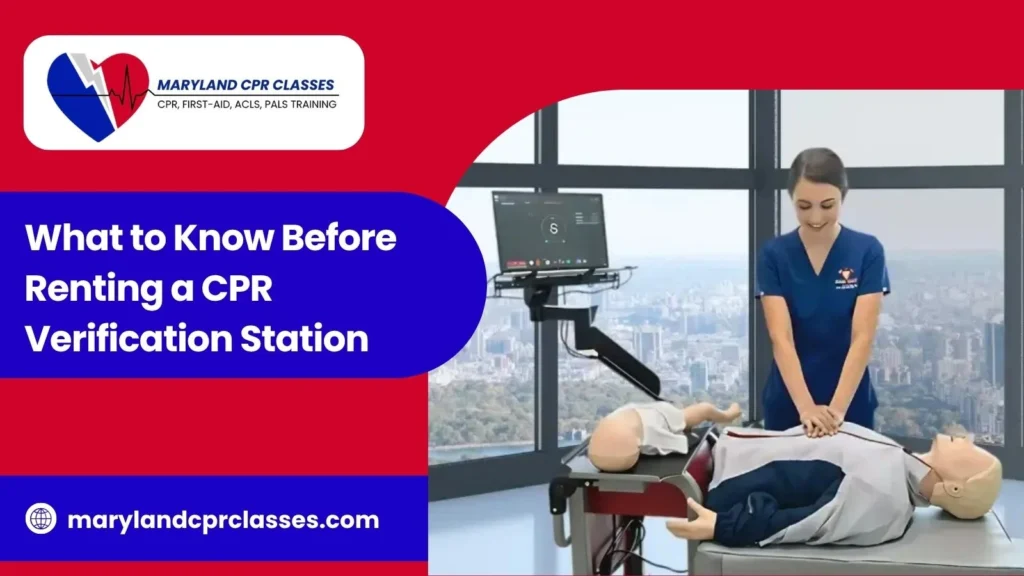
Many students choose Self-Guided Learning, which combines online coursework with a short in-person skills session. After completing the online portion, students visit a CPR Verification Station to demonstrate their skills using a Voice-Assisted Manikin. This flexible format allows students to learn at their own pace while completing the hands-on skills assessment required for American Heart Association certification.
Healthcare professionals often appreciate this option because it reduces time away from work while still providing the practical experience needed to build confidence.
Final Thoughts
So, is BLS certification the same as CPR? The answer is no.
CPR certification teaches the essential skills needed to respond to cardiac arrest, choking, and other life-threatening emergencies. BLS certification includes those same skills while adding more advanced techniques used by healthcare professionals in hospitals, clinics, and emergency medical settings.
Choosing the right course depends on your goals. If you need certification for a workplace outside the healthcare field or simply want to learn life-saving skills, a CPR certification course may be the right choice. If you’re a healthcare professional, nursing student, medical student, or your employer specifically requires it, BLS certification is the appropriate option.
Before registering, take a few minutes to review your employer’s or school’s certification requirements. Enrolling in the correct course the first time can save time and help you stay on track with your career or educational goals.
Whether you’re earning your first certification or renewing an existing one, quality training gives you the knowledge and practical experience to respond confidently when someone needs help the most.
Frequently Asked Questions
Does BLS certification include CPR?
Yes. BLS certification includes CPR training for adults, children, and infants. It also covers additional skills used by healthcare professionals, such as two-rescuer CPR, team dynamics, and bag-mask ventilation.
Can anyone take a BLS course?
Yes. Anyone can enroll in a BLS course. Although it is intended for healthcare providers, students, parents, caregivers, and other interested individuals are welcome to take the course if they want more advanced training.
Is BLS harder than CPR certification?
BLS is more comprehensive than a standard CPR course because it covers additional topics used in healthcare settings. However, the course is structured to help students learn each skill step by step, making it manageable for both new and experienced learners.
Do hospitals accept CPR certification instead of BLS?
In most cases, no. Hospitals and many healthcare employers specifically require American Heart Association BLS certification because it includes the additional skills needed in clinical environments. Always confirm your employer’s requirements before registering for a course.
Is BLS certification required for nursing school?
Many nursing programs require students to obtain BLS certification before beginning clinical rotations. Requirements can vary by school, so it’s a good idea to check with your program before enrolling.
Can I renew my BLS certification through Self-Guided Learning?
Yes. Many students renew their certification through Self-Guided Learning, completing the online coursework first and then finishing a hands-on skills assessment at a CPR Verification Station using a Voice-Assisted Manikin.