
For Maryland businesses, CPR training is not simply another item to add to the employee training calendar. For healthcare organizations, schools, childcare centers, offices, and other workplaces, the training format can affect scheduling, employee availability, productivity, and how easily an entire team can complete certification.
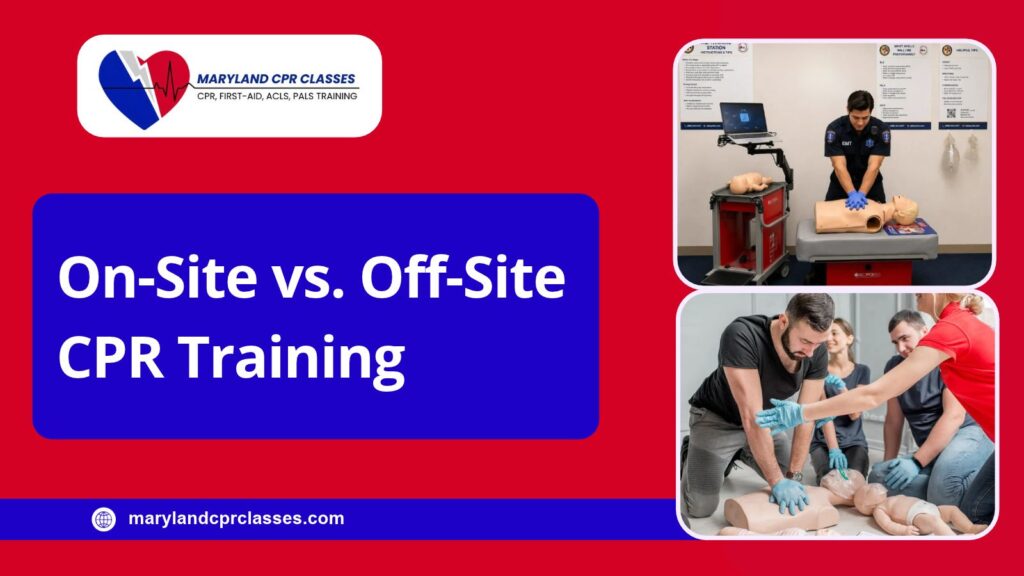
The two most common approaches are on-site CPR training and off-site CPR training. On-site training brings an instructor and training equipment to your workplace. Off-site training requires employees to travel to a training location for their course.
Both options can provide high-quality American Heart Association (AHA) training. The better choice depends on the size of your team, the course employees need, your schedule, and how much flexibility your organization requires. The AHA offers classroom, blended learning, Self-Guided Learning, and group training options, giving employers several ways to organize CPR education.
For many Maryland businesses, on-site training can make group certification easier to coordinate. However, off-site training can be more practical when only a few employees need certification or when the organization does not have a suitable training space.
What Is On-Site CPR Training?
On-site CPR training means the training takes place at your business, facility, school, medical practice, or other organization. Instead of sending employees to a training center, the training provider brings the instructor and necessary equipment to your location.
A group can complete its training at a time arranged around the organization’s operating schedule. This can be particularly useful for businesses with multiple employees who need the same certification.
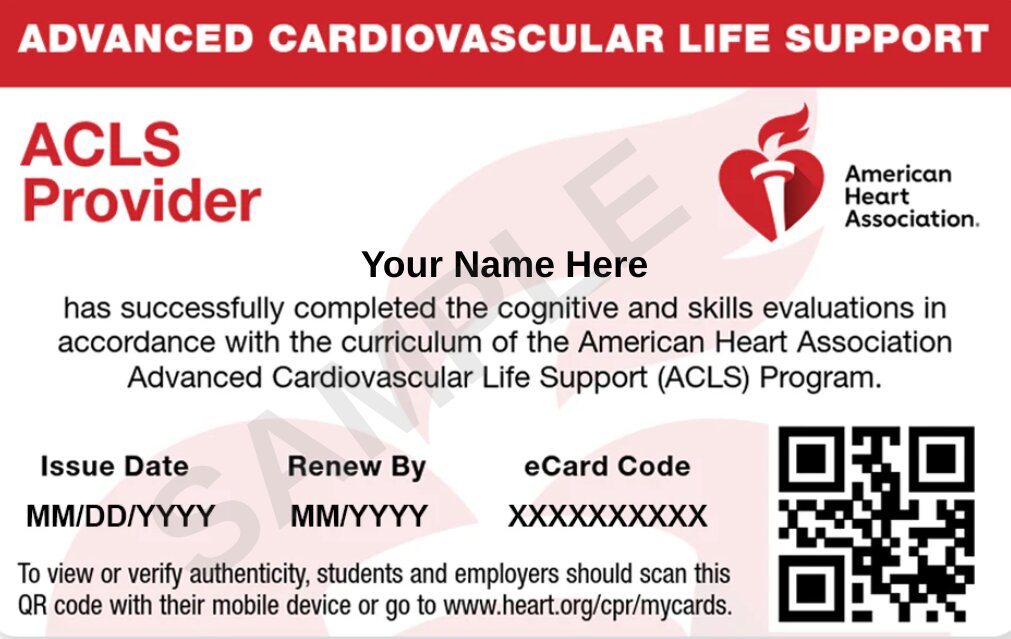
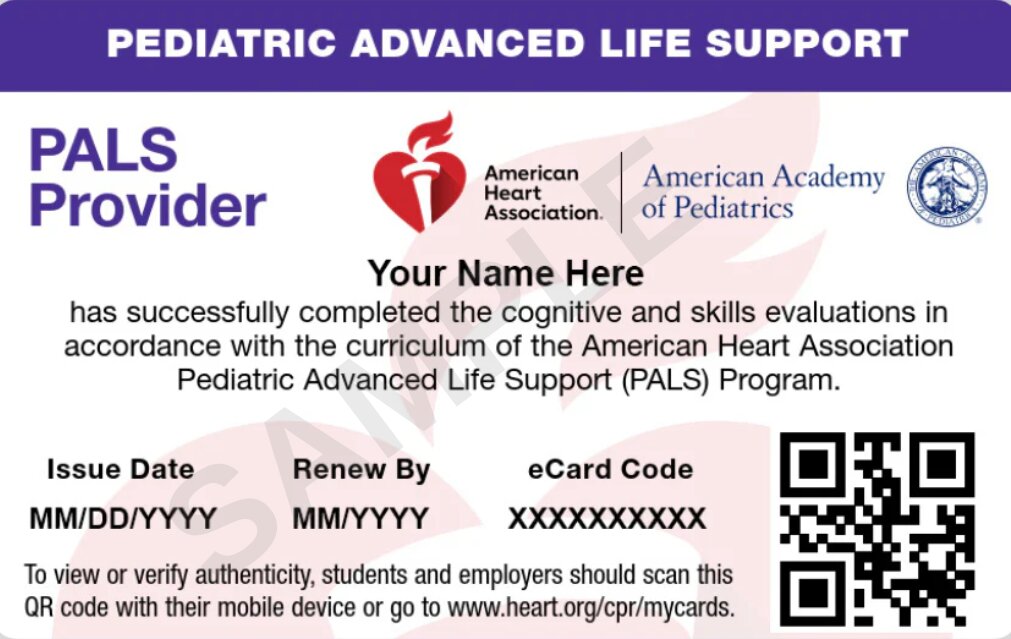
For healthcare organizations, on-site training can be used for courses such as BLS, ACLS, and PALS when the training provider offers those courses for groups. The AHA recognizes BLS, ACLS, and PALS as healthcare professional courses, with course options that include classroom and blended formats.
On-site training may also work well for organizations that want several employees trained during the same session instead of having staff attend separate classes on different days.
How On-Site Training Works
The process is generally straightforward.
The business first identifies how many employees need training and which AHA course each employee requires. The training provider then works with the organization to establish a training date, location, and course format.
Depending on the course and training arrangement, employees may complete their learning in a classroom setting or use a flexible learning format before completing the required hands-on portion.
The training takes place at the business or another location selected by the organization. Employees can complete their required skills training without traveling to a separate training center.
Maryland CPR Classes provides on-site CPR training for organizations and teams throughout Maryland
What Is Off-Site CPR Training?
Off-site CPR training requires employees to travel to the training provider’s location.
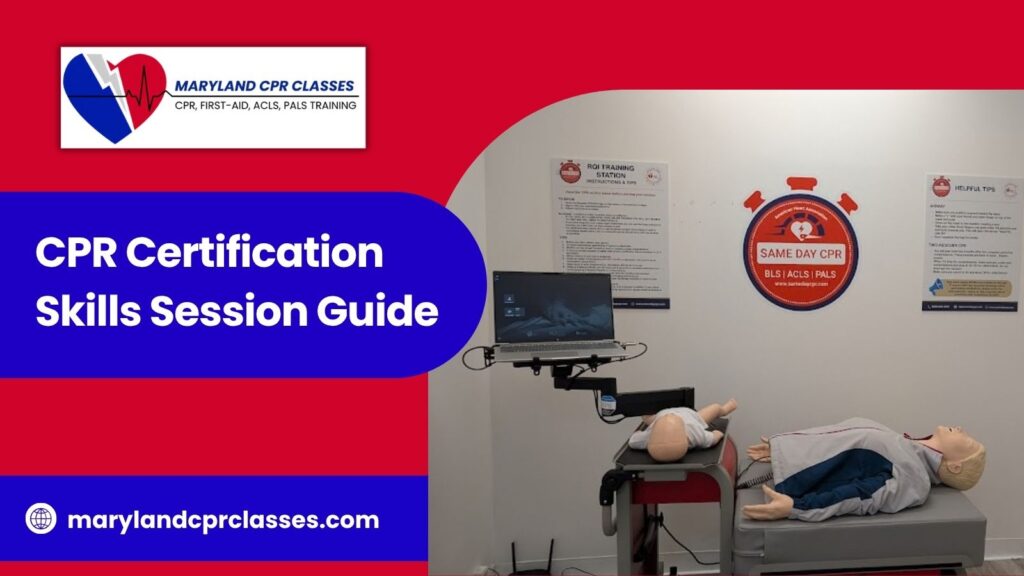
Instead of bringing an instructor to your workplace, employees attend an established training location where the necessary classroom space, equipment, and training stations are already available.
This approach can be convenient for individuals and small groups. A healthcare professional who needs BLS certification, for example, may prefer to register for an available class and attend the session without arranging group training for an entire workplace.
Off-site training can also be useful when a business does not have enough space for several employees to practice CPR skills or when the organization wants employees to complete training independently.
The AHA offers classroom training in which students spend the full learning experience with an AHA Instructor. It also offers blended learning, where students complete the cognitive portion online before completing the hands-on skills portion.
On-Site vs. Off-Site CPR Training for Maryland Businesses
The biggest difference is not the quality of the CPR education. It is how the training fits into your organization’s schedule and operations.
| Factor | On-Site CPR Training | Off-Site CPR Training |
| Location | Training takes place at your workplace | Employees travel to a training location |
| Group size | Well suited for teams | Better suited to individuals or smaller groups |
| Scheduling | Can be arranged around workplace needs | Based on available class schedules |
| Travel | Little or no employee travel | Employees must travel |
| Work disruption | Can reduce travel-related downtime | Employees spend additional time traveling |
| Equipment | Provider brings training equipment | Equipment is already available at training location |
| Convenience | High for organized groups | High for individual learners |
| Space requirements | Business needs suitable training space | Training center provides the space |
| Course options | Can support group BLS, ACLS, and PALS training | Wide range of individual course options |
| Best suited for | Businesses, healthcare teams, schools, organizations | Individuals and small groups |
The right choice depends on your organization’s circumstances rather than simply choosing the option that sounds more convenient.
When Is On-Site CPR Training Better?
On-site CPR training is often the stronger option for organizations with several employees who need certification.
1. You Need to Train Multiple Employees
If 10, 20, or more employees need certification, sending each person to an outside location can become difficult to coordinate.
Different employees may have different schedules, shifts, responsibilities, and availability. Coordinating individual registrations can create unnecessary administrative work.
With on-site training, an organization can arrange a group session and have employees complete training together.
2. Your Employees Work in Shifts
Healthcare facilities, urgent care centers, medical offices, assisted living facilities, and other organizations often operate across multiple shifts.
Taking employees away from the workplace at different times can make staffing more difficult.
An organization may be able to arrange multiple on-site sessions or schedule training around its staffing needs. This does not eliminate the need to plan for employee coverage, but it can make group training easier to organize.
3. You Want to Reduce Travel
Travel adds time to employee training.
The employee has to leave the workplace, travel to the training center, complete the course, and return. For a large team, those additional travel requirements can add up.
On-site training eliminates the trip to an outside training location.
4. You Want the Team Trained Together
Training employees together can simplify scheduling and recordkeeping.
It also means team members complete their training during the same organized period instead of attending different classes weeks apart.
For healthcare teams, this can be particularly useful when several employees require the same AHA course.
5. You Have an Appropriate Training Space
On-site training works best when the organization has a suitable room where employees can safely participate in hands-on CPR practice.
The provider can explain the space requirements before scheduling the session.
When Is Off-Site CPR Training Better?
Off-site training may be the better choice when only a small number of employees need certification.
1. Only One or Two Employees Need Certification
If one nurse needs BLS renewal or one employee needs an AHA course, arranging an entire group session at the workplace may not make sense.
Registering for an available off-site class can be simpler.
2. Your Workplace Does Not Have Enough Space
CPR training involves hands-on practice. Employees need enough room to work with training equipment safely.
A small medical office, retail location, or crowded workplace may not have an appropriate training area.
In that situation, an established training location may provide a more practical environment.
3. Employees Have Different Certification Needs
One employee may need BLS, another may need ACLS, and another may need PALS.
In these situations, sending employees to appropriate individual courses may be easier than coordinating a single workplace training event.
The AHA offers BLS, ACLS, and PALS as separate healthcare professional courses, with different requirements and learning objectives.
4. Employees Prefer Flexible Learning
Some healthcare professionals prefer completing the educational portion independently before attending a shorter hands-on session.
The AHA offers Self-Guided Learning for BLS, ACLS, and PALS. Students complete the cognitive portion independently and then complete hands-on skills at an approved CPR Verification Station.
This can be a useful option for employees who have difficulty committing to a traditional classroom schedule.
Which Training Format Is Better for Healthcare Organizations?
For Maryland healthcare organizations, the decision often comes down to group size and scheduling.
A hospital department, physician practice, nursing facility, urgent care center, or EMS organization with a large number of employees needing the same course may benefit from organizing group training.
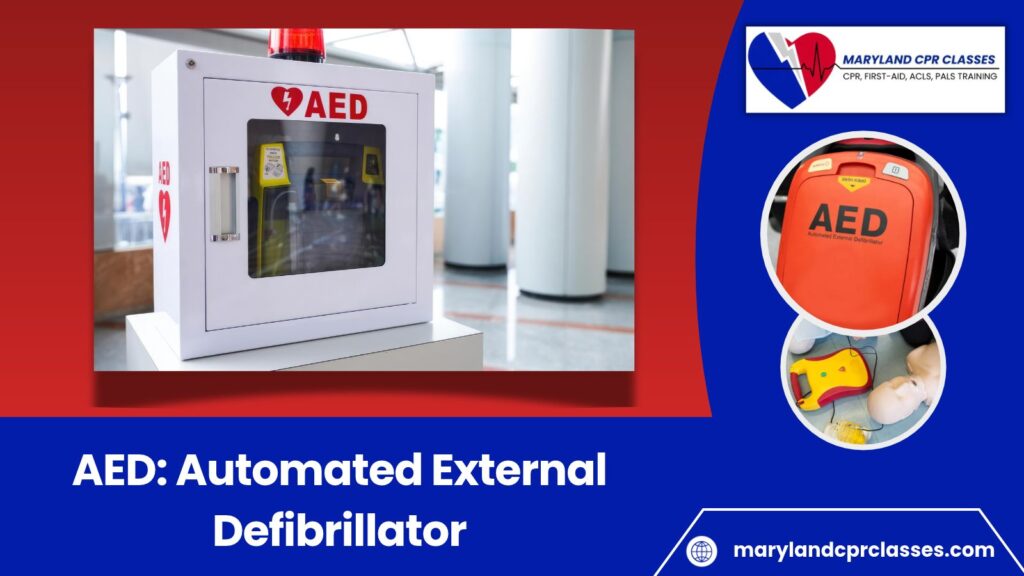
BLS is commonly required for healthcare professionals, while ACLS and PALS apply to healthcare workers whose roles involve the management of specific adult or pediatric emergencies. The AHA describes BLS as training that includes high-quality CPR, AED use, and ventilations, while ACLS and PALS provide more advanced education for appropriate healthcare professionals.
The organization should identify the exact course required for each employee rather than assuming everyone needs the same certification.
For example, a pediatric practice may have employees who require different levels of training based on their responsibilities. Similarly, an emergency department may need BLS and ACLS training for different members of its team.
What About Self-Guided Learning?
Self-Guided Learning can be a practical middle ground between traditional classroom training and completely independent online education.
The AHA explains that Self-Guided Learning combines independent cognitive learning with hands-on skills completed using an approved verification station.
For eligible healthcare professionals, this format can provide more control over when the learning portion is completed.
A learner may complete the online portion at a convenient time and then schedule the hands-on portion separately. A CPR Verification Station can provide objective feedback while the learner performs CPR skills.
This option can be especially useful for healthcare professionals who have unpredictable schedules or cannot easily attend a long classroom session.
Maryland organizations can also consider Self-Paced CPR Certification when flexibility is an important consideration and the selected course format meets the employee’s certification requirements.
Can Businesses Bring CPR Training to Their Workplace?
Yes. Group CPR training can be arranged at a business or organization when the training provider offers on-site services and the location meets the necessary requirements.
On-site training can be used by many types of Maryland organizations, including healthcare practices, schools, childcare facilities, offices, fitness facilities, and other workplaces.
For organizations that regularly need CPR training, another option is to consider a CPR Verification Station or related training equipment arrangement where appropriate. Organizations may also explore renting a CPR Verification Station when they need a flexible solution for ongoing training.
A Voice-Assisted Manikin can provide feedback during skills practice in supported training formats. The AHA notes that hands-on skills sessions for certain eLearning and blended learning courses may be completed with an AHA Instructor or a Voice Assisted Manikin where available.
The important point is that the training format should match the specific AHA course and certification requirements.
How Much Does On-Site CPR Training Cost for a Business?
There is no single price that applies to every Maryland organization.
The cost can depend on factors such as the number of employees, course type, training format, location, instructor requirements, equipment, and whether multiple sessions are needed.
For a business, it is better to evaluate the total training cost rather than only the course price per employee.
Consider:
- Employee travel time
- Time away from normal duties
- Number of employees being trained
- Number of training sessions required
- Scheduling and administrative work
- Facility requirements
- Course and equipment costs
For a group, on-site training may provide operational advantages even when the initial per-person price does not appear dramatically different from an off-site class.
What Should Maryland Businesses Consider Before Choosing?
Before booking CPR training, ask five questions.
How many employees need certification?
Large groups often have more reason to consider on-site training.
Which AHA courses do employees need?
Do not assume BLS, ACLS, and PALS are interchangeable. Each course serves a different purpose.
Can employees leave the workplace for training?
If travel creates staffing or scheduling problems, on-site training may be more practical.
Does the workplace have enough space?
If not, an off-site location may be easier.
How much scheduling flexibility does the organization need?
Businesses with changing shifts may benefit from flexible training formats, including Self-Guided Learning where appropriate.
On-Site or Off-Site CPR Training: Which Is Better?
There is no universal answer for every Maryland business.
On-site CPR training is usually the better choice for larger groups, organizations with scheduling challenges, and businesses that want employees trained at their own facility. It reduces travel and can make group scheduling easier.
Off-site CPR training may be better for individuals, small groups, or employees who need different courses. It also makes sense when a workplace lacks adequate training space.
For healthcare professionals, the most important consideration is selecting the correct AHA course and completing all required components of that course. The AHA offers classroom, blended learning, and Self-Guided Learning options for different training needs.
For Maryland businesses, the best training arrangement is the one that allows employees to complete the appropriate AHA CPR certification without creating unnecessary scheduling and operational problems.
Maryland CPR Classes can help organizations arrange on-site BLS, ACLS, and PALS training and explore flexible training options for their teams. If bringing training to your workplace makes sense for your organization, contact Maryland CPR Classes to discuss your group size, course requirements, and preferred schedule.