
If you work in healthcare, you have probably heard both PALS and ACLS mentioned in the same breath, often with people assuming they’re interchangeable. They are not. Understanding PALS vs ACLS matters because choosing the wrong course can leave you without the credential your employer actually requires, and it can leave you unprepared for the patients you’ll treat most often.
This guide breaks down what each certification covers, who needs it, and how to get certified through Maryland CPR Classes, a training provider that follows American Heart Association (AHA) guidelines for healthcare professionals across the state.
Understanding ACLS Certification
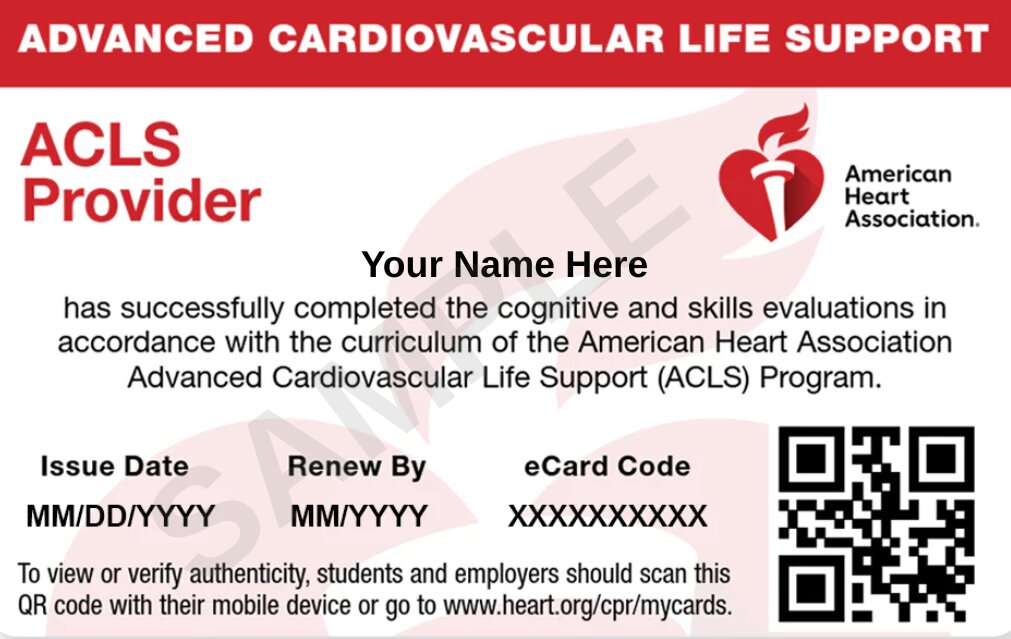
ACLS stands for Advanced Cardiovascular Life Support. It’s built for healthcare providers who manage cardiac arrest, stroke, and other serious cardiovascular emergencies in adult and adolescent patients. Nurses in the ICU, physicians in the ED, paramedics on a code team, and respiratory therapists all rely on ACLS skills regularly.
The course goes well past basic CPR. You’ll work through rhythm recognition, defibrillation, airway management, IV and IO access, and the pharmacology used during a cardiac emergency. A big part of ACLS is learning to function as part of a resuscitation team, since real codes rarely involve just one person. You’ll practice team roles, closed-loop communication, and how to lead or support a code without losing track of what’s happening to the patient.
ACLS assumes you already know BLS-level CPR. It builds on those fundamentals rather than repeating them, so most training centers, including Maryland CPR Classes, recommend a current BLS certification before you start.
Understanding PALS Certification
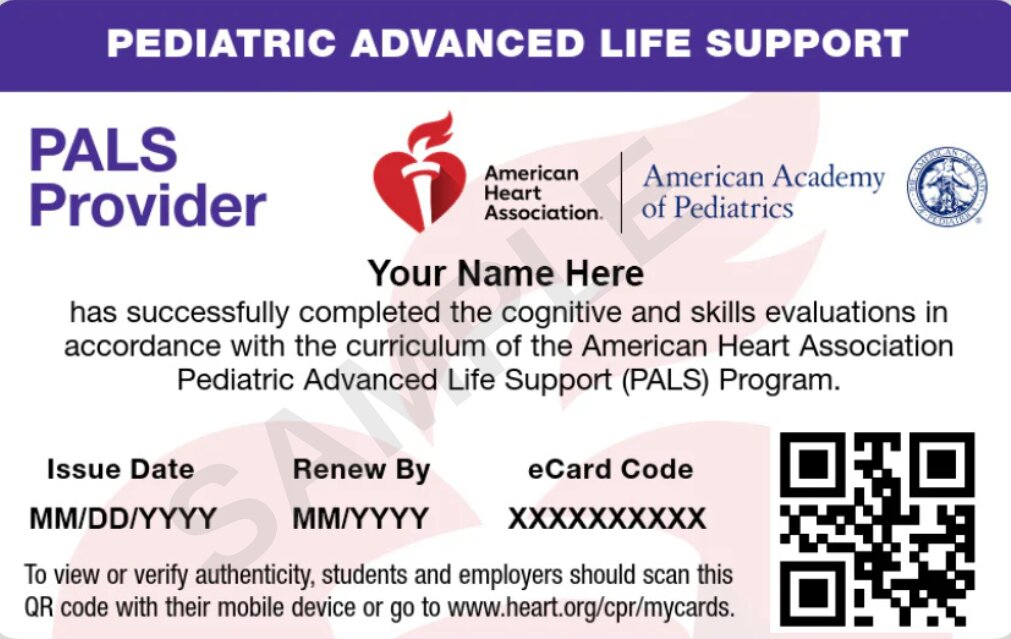
PALS, or Pediatric Advanced Life Support, applies the same core idea to infants and children instead of adults. Kids are not just smaller adults. Their airways, vital signs, medication dosing, and the way they decompensate during an emergency are all different, and that difference is the entire reason PALS exists as its own certification.
In a PALS course, you’ll learn the systematic approach to pediatric assessment, how to recognize respiratory distress and shock before a child fully decompensates, and how to manage pediatric cardiac arrest and arrhythmias. Weight-based medication dosing gets a lot of attention here, since getting a dose wrong in a small child carries serious risk. You’ll also practice pediatric-specific CPR technique and defibrillation, along with team dynamics similar to what’s taught in ACLS.
Pediatric nurses, NICU and PICU staff, school nurses, pediatricians, EMTs who respond to pediatric calls, and childcare-adjacent medical staff typically need PALS. Some emergency departments require it for every provider on staff, regardless of whether they see many pediatric patients, simply because those cases can’t be predicted.
PALS vs ACLS: The Key Differences
The short version: ACLS treats adults, PALS treats children. But the real differences run deeper than patient age.
Patient population. ACLS covers adults and adolescents. PALS covers infants through adolescence, with heavy emphasis on infants and young children whose physiology behaves very differently under stress.
Assessment approach. ACLS uses adult-focused rhythm and rhythm-strip interpretation as a starting point. PALS uses a structured pediatric assessment sequence designed to catch early warning signs in kids, since children can look stable and then crash quickly.
Medication dosing. ACLS drug protocols use standard adult dosing. PALS requires weight-based calculations for nearly every medication, which is one of the more challenging parts of the course for many students.
Equipment sizing. Airway devices, defibrillator pads, and other equipment differ by patient size in PALS, while ACLS training assumes adult-sized equipment throughout.
Clinical setting. ACLS is more common in adult ICUs, emergency departments, and general medical-surgical units. PALS shows up more in pediatric units, NICUs, PICUs, school health settings, and EMS agencies that handle pediatric calls.
What both courses share is the underlying goal: give providers a systematic, team-based way to respond to a life-threatening emergency without freezing or losing time. Both are AHA certifications valid for two years, both build on BLS skills, and both combine classroom or online learning with a hands-on skills evaluation.
Who Actually Needs Which Certification
This is where a lot of confusion happens, because job titles alone don’t always tell you the answer. Here’s a general breakdown:
- ACLS is typically required for ER nurses, ICU nurses, physicians, paramedics, anesthesiologists, cardiac cath lab staff, and any provider who might lead or participate in an adult resuscitation.
- PALS is typically required for pediatric nurses, NICU/PICU staff, pediatricians and pediatric residents, school nurses, EMTs and paramedics who transport children, and childcare medical staff.
- Both are often required for emergency department staff, since EDs treat patients of every age and can’t predict who walks through the door next.
If your employer hasn’t specified which one you need, check your job description or ask your manager directly. Some Maryland hospitals and health systems require both certifications for float pool staff or anyone rotating through multiple units.
How Maryland CPR Classes Makes Certification Convenient
Getting certified shouldn’t mean losing a full day of pay or driving across the state for a single class. Maryland CPR Classes offers a few formats built around how busy healthcare schedules actually work.
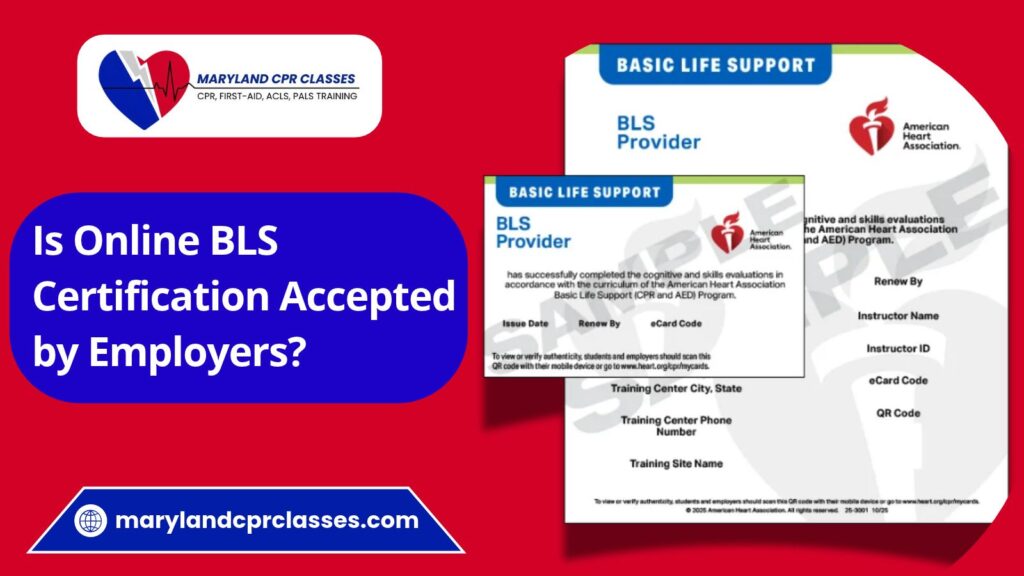
Self-Guided Learning lets you complete the cognitive portion of ACLS or PALS online, at your own pace, before coming in for a short in-person skills session. This is the most popular option among working nurses, EMTs, and physicians who need to fit certification around shift work.
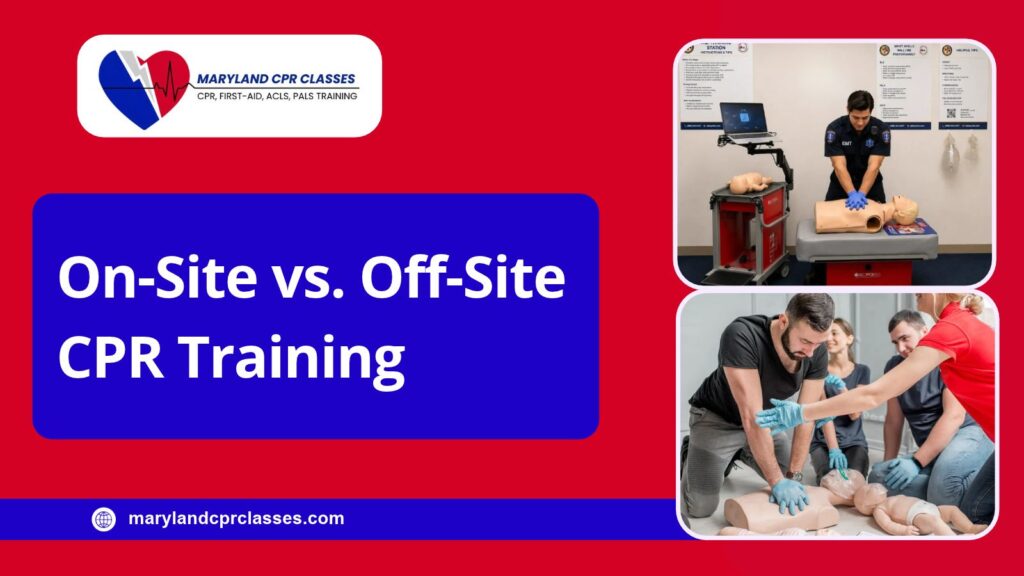
CPR Verification Stations give you a dedicated space to demonstrate your hands-on skills once the online coursework is done. These sessions are focused and efficient, since the online portion already covered the material and the in-person time is spent purely on skills confirmation.
Voice-Assisted Manikins are used during skills verification to give real-time feedback on compression depth, rate, and ventilation. This makes the skills check more objective and helps you walk out knowing exactly where you stand, rather than guessing.
Self-Paced CPR Certification is available for providers who want maximum flexibility, particularly those juggling rotating shifts or multiple jobs across Maryland facilities.
Maryland CPR Classes also rents CPR Verification Stations to hospitals, EMS agencies, nursing schools, and other organizations that want to run certification or recertification days on-site for their own staff. This is a practical option for training coordinators who need to certify a large group without sending everyone offsite individually.
Renewal and Recertification
Both ACLS and PALS cards are valid for two years from the completion date. AHA guidelines get updated periodically based on new resuscitation science, so recertification isn’t just a formality. It’s how you stay current with the latest evidence-based protocols.
Recertification through Maryland CPR Classes follows the same Self-Guided Learning structure as initial certification: complete the updated online material, then verify your skills in person. Most providers find recertification faster than their first course, since they’re refreshing existing skills rather than learning them from scratch.
Can You Hold Both PALS and ACLS?
Yes, and many providers do. If your role involves both adult and pediatric patients, holding both certifications makes sense and is often required. Emergency department nurses, general paramedics, and float staff commonly carry both cards. Maryland CPR Classes can help you schedule both courses close together, which saves time compared to spacing them months apart.
Choosing the Right Path for Your Maryland Healthcare Career
If you’re still unsure which certification fits your role, start with your patient population. If you regularly treat adults in cardiac or respiratory distress, ACLS is your priority. If your work involves infants or children, PALS is the one you need. If your setting includes both, plan on getting certified in both.
Whichever path applies to you, the goal is the same: walk into an emergency with the skills and confidence to act correctly, without hesitation. Maryland CPR Classes trains healthcare professionals across the state in ACLS and PALS using AHA-aligned coursework, flexible Self-Guided Learning options, and hands-on skills verification that actually prepares you for real patients.
Ready to get certified? Browse upcoming ACLS and PALS course dates at Maryland CPR Classes and reserve a spot that fits your schedule.
Frequently Asked Questions
Do I need BLS before I can take ACLS or PALS?
A current BLS certification is strongly recommended and often required by employers. Both ACLS and PALS build directly on BLS skills rather than re-teaching them, so you should be comfortable with basic CPR and AED use before you start.
How long does ACLS or PALS certification last?
Both are valid for two years from the completion date. After that, you’ll need to recertify to stay current with updated AHA protocols.
Can I complete ACLS or PALS entirely online?
The cognitive portion can be completed online through Self-Guided Learning, but AHA certification still requires an in-person skills session at a CPR Verification Station. A card isn’t issued until your hands-on skills are verified.
Is PALS harder than ACLS?
Neither course is inherently harder, but many providers find the weight-based medication dosing in PALS more challenging than the standard adult dosing used in ACLS. Familiarity with pediatric patients ahead of time can make a real difference.
Do I need both PALS and ACLS?
It depends on your patient population. Providers who treat both adults and children, such as emergency department staff or general EMS providers, often need both. Check your job description or ask your employer directly if you’re unsure.
Will my Maryland CPR Classes certification be accepted nationwide?
Yes. AHA course completion cards are recognized across the country and internationally, so your ACLS or PALS certification travels with you if you change employers or relocate.
How long does the in-person skills session take?
Skills sessions at a CPR Verification Station are typically short, since the online coursework already covers the material. Most providers complete their hands-on check in under an hour.