
Healthcare professionals often have demanding schedules, making it difficult to attend traditional CPR classes at fixed times. To make certification more flexible while maintaining American Heart Association (AHA) standards, many providers now offer Self-Guided Learning combined with a CPR Verification Station.
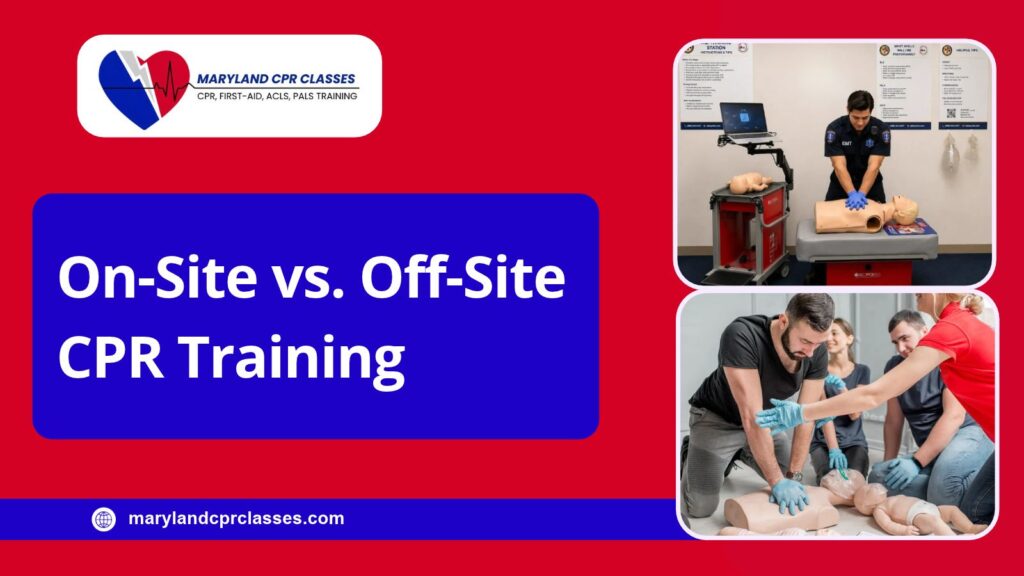
Instead of spending hours in a classroom, students complete the required online learning at their own pace before attending a brief in-person skills assessment. During this session, they demonstrate their CPR skills using a Voice-Assisted Manikin, which provides immediate feedback on their performance.
This training model gives healthcare professionals a convenient way to complete their certification while ensuring they meet the practical skills requirements established by the American Heart Association.
In this guide, you’ll learn what a CPR Verification Station is, how it works, who can use it, and what to expect during your skills assessment.
CPR Verification: What You Need to Know
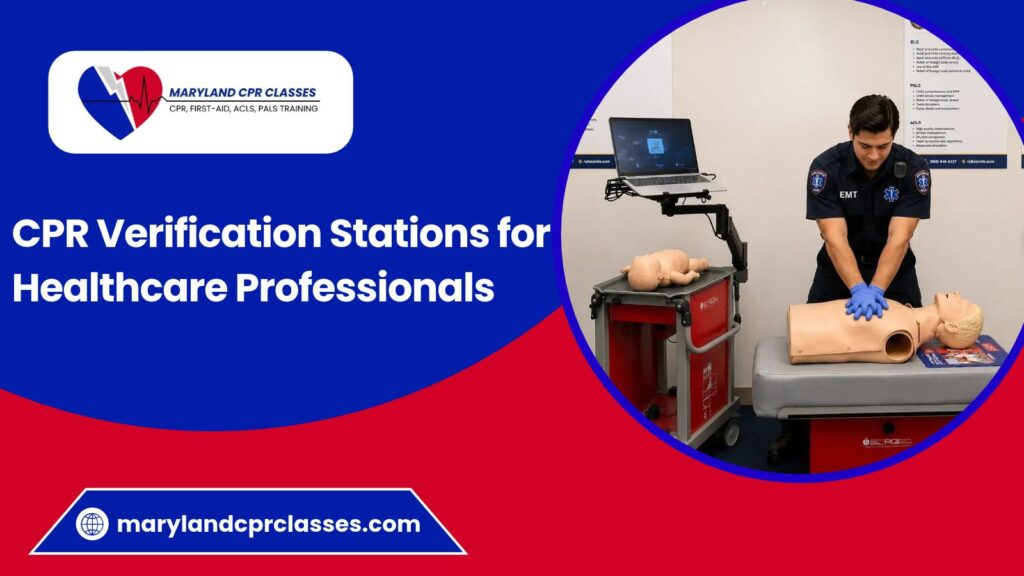
A CPR Verification Station is a dedicated skills assessment station used as part of the American Heart Association’s blended learning model. After completing the required online coursework through Self-Guided Learning, students visit the station to demonstrate their hands-on CPR skills.
Rather than relying on a traditional classroom format, the station uses advanced technology to measure CPR performance against AHA course requirements. During the assessment, students perform CPR on a Voice-Assisted Manikin equipped with sensors that evaluate important performance metrics in real time.
This technology helps create a standardized skills assessment by providing consistent, objective feedback throughout the session.
Why Are CPR Verification Stations Becoming More Popular?
The way healthcare professionals complete CPR certification has changed over the years. Many students now prefer flexible learning options that allow them to complete coursework around their work schedules rather than attending lengthy classroom sessions.
A CPR Verification Station supports this approach by separating the course into two parts:
- Self-paced online learning
- Short in-person skills assessment
This allows students to study when it’s convenient and complete the practical portion at a scheduled time without spending an entire day in class.
For nurses, physicians, EMTs, paramedics, and other busy healthcare providers, this flexibility can make maintaining certification much more manageable.
How Does a CPR Verification Station Work?
Although the experience is different from a traditional classroom course, the certification process is straightforward.
Step 1: Complete the Online Learning
Students begin by completing the required American Heart Association online educational modules through Self-Guided Learning.
The online portion covers the knowledge needed for the selected course, such as:
- CPR techniques
- Emergency response procedures
- AED use
- Team dynamics
- Course-specific concepts for BLS, ACLS, or PALS
Students can complete this portion at their own pace before scheduling their skills assessment.
Step 2: Visit a CPR Verification Station
After completing the online coursework, students attend a scheduled appointment at a CPR Verification Station.
This visit focuses entirely on demonstrating practical CPR skills rather than reviewing course content.
Step 3: Complete Your Skills Assessment
During the assessment, students perform the required CPR skills using a Voice-Assisted Manikin.
The system guides each step of the process while monitoring important CPR performance measures, including:
- Compression depth
- Compression rate
- Full chest recoil
- Hand placement
- Ventilation performance (when required)
As students perform each skill, the system provides immediate audio and visual feedback, allowing them to make adjustments during the assessment.
Step 4: Receive Your AHA Course Completion eCard
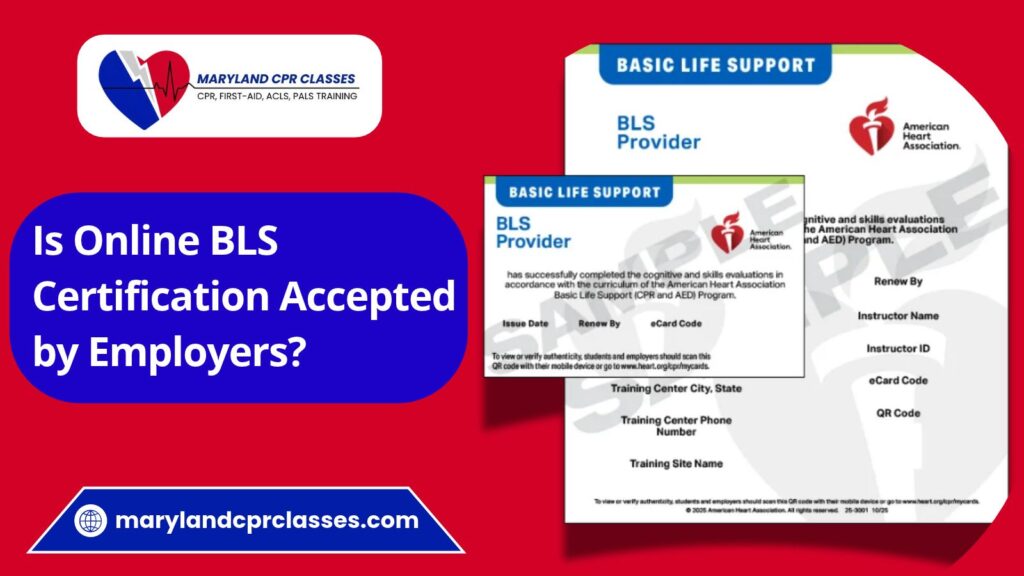
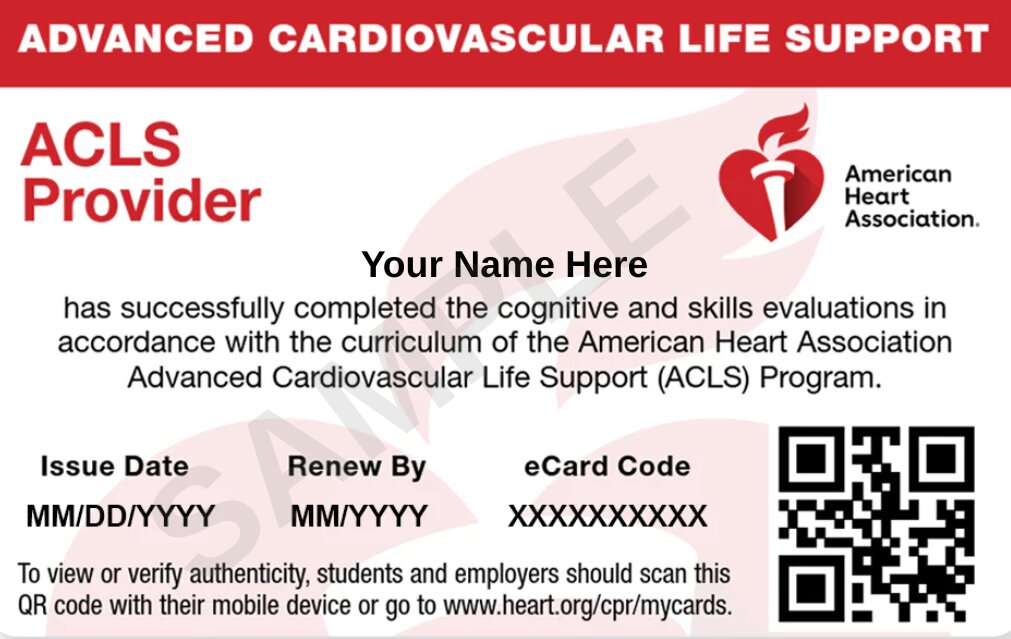
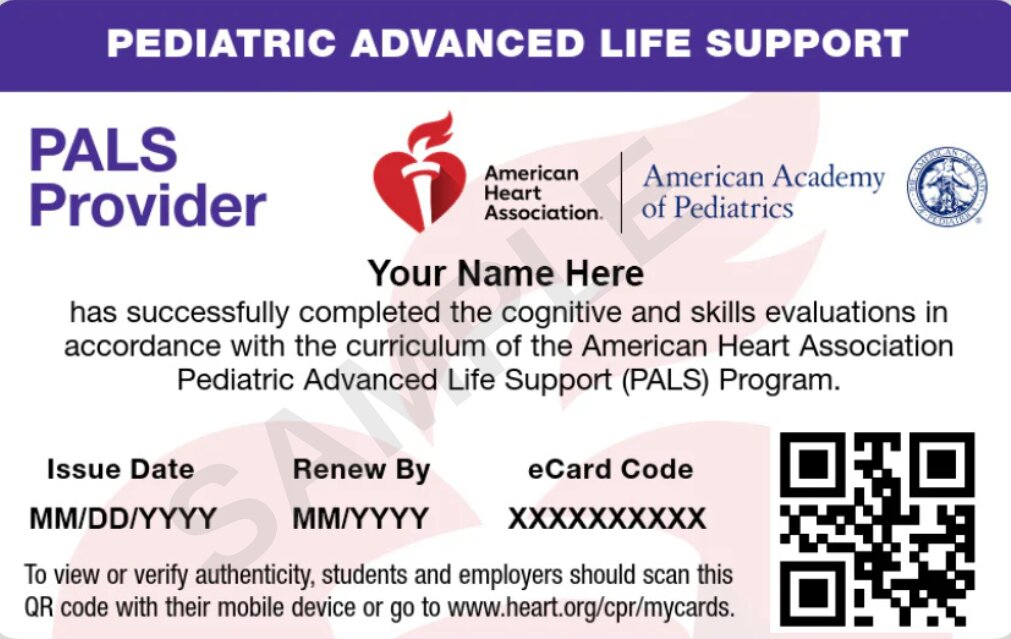
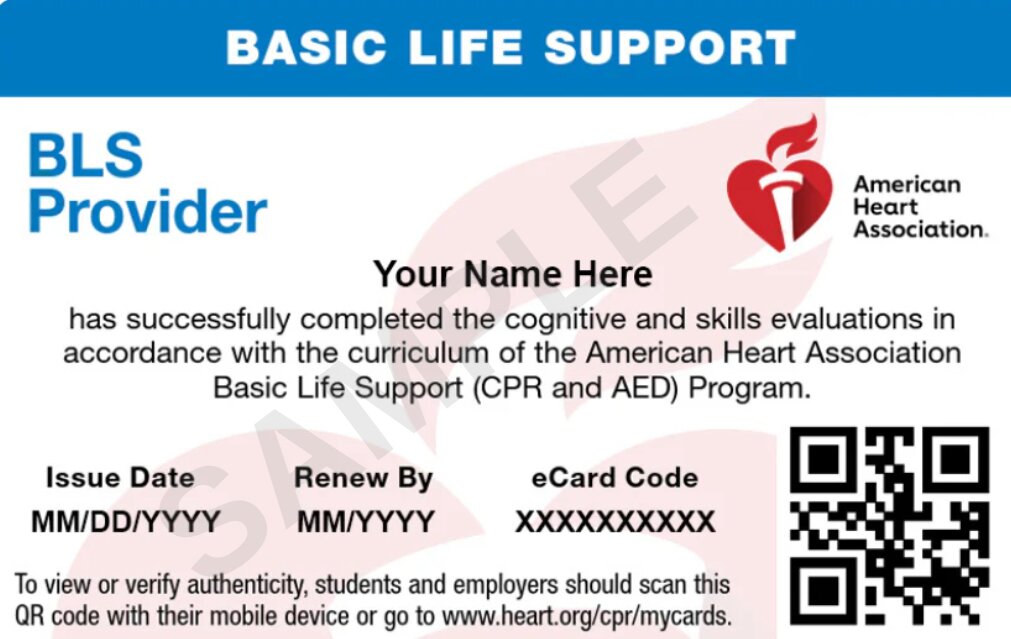
Once all course requirements have been successfully completed, students receive their official American Heart Association course completion eCard.
This eCard serves as proof of successful course completion and can be provided to employers, schools, or licensing organizations when required.
What Is a Voice-Assisted Manikin?
A Voice-Assisted Manikin is an advanced training manikin used during the skills assessment at a CPR Verification Station.
Unlike a standard practice manikin, it provides immediate feedback as you perform CPR. The system evaluates important aspects of your technique and lets you know if adjustments are needed while you’re completing the assessment.
Depending on the course, the manikin may evaluate:
- Compression depth
- Compression rate
- Chest recoil
- Hand placement
- Ventilation performance
- Overall CPR quality
This real-time feedback helps ensure you’re performing each skill according to current American Heart Association course requirements.
What Are the Benefits of a CPR Verification Station?
Many students appreciate this learning model because it combines flexibility with hands-on skills verification.
Here are some of the key benefits.
Learn at Your Own Pace
With Self-Guided Learning, you’re not required to complete all of the educational content in a single classroom session.
You can work through the online material when it fits your schedule, making it easier to balance certification with work, school, or family commitments.
Spend Less Time in a Classroom
Instead of attending a full-day classroom course, you’ll complete the educational portion online and visit the CPR Verification Station only for your hands-on skills assessment.
This approach can be especially helpful for healthcare professionals who work rotating shifts or have limited availability.
Immediate Performance Feedback
One of the biggest advantages of a Voice-Assisted Manikin is the feedback it provides during your skills assessment.
Rather than waiting until the end of the session, you’ll receive guidance throughout the process, helping you understand how well you’re performing key CPR skills.
Consistent Skills Assessment
Because the CPR Verification Station uses standardized technology to evaluate CPR performance, every student completes the same assessment process.
This creates a consistent experience while ensuring the required skills are demonstrated successfully.
Convenient Scheduling
Many students find it easier to schedule a brief skills assessment than attend a traditional classroom course with fixed start and end times.
This flexibility allows you to choose an appointment that works best with your personal or professional schedule.
Is a CPR Verification Station the Same as a Traditional CPR Class?
Not exactly.
Both learning formats cover the same required course content and result in an official American Heart Association course completion eCard after all requirements have been successfully completed.
The primary difference is how the training is delivered.
With a traditional classroom course, students complete both the educational content and hands-on practice during scheduled class time.
With Self-Guided Learning, students first complete the required online educational modules at their own pace. They then attend a scheduled appointment to complete the practical skills assessment at a CPR Verification Station.
For many healthcare professionals, this blended approach offers greater flexibility while still meeting the American Heart Association’s course requirements.
Check Out: Instructor-Led Training vs. CPR Verification Stations
Which Courses Can Be Completed Using a CPR Verification Station?
Depending on course availability, a CPR Verification Station may be used for several American Heart Association programs, including:
- Basic Life Support (BLS)
- Advanced Cardiovascular Life Support (ACLS)
- Pediatric Advanced Life Support (PALS)
- Heartsaver CPR AED
- Heartsaver First Aid CPR AED
The available courses may vary by training center, so it’s always best to review the course details before registering.
Is a CPR Verification Station Right for You?
A CPR Verification Station can be an excellent option if you:
- Have a busy or changing work schedule.
- Prefer learning online before demonstrating your skills.
- Need flexibility when scheduling your certification.
- Are renewing your certification.
- Want to complete the educational portion at your own pace.
However, if you learn best through extended face-to-face instruction or prefer a traditional classroom environment, you may wish to explore other available course formats.
The best option is the one that meets both your learning preferences and your employer’s certification requirements.
Why Choose Maryland CPR Classes?
At Maryland CPR Classes, we make earning your American Heart Association certification convenient without compromising the required hands-on skills assessment.
Powered by Same Day CPR, an authorized American Heart Association Training Center, we offer eligible courses through Self-Guided Learning, allowing you to complete the online educational portion at your own pace before attending a scheduled skills assessment.
During your appointment, you’ll complete your required skills testing at a CPR Verification Station using a Voice-Assisted Manikin, which provides immediate feedback throughout the assessment.
Whether you’re completing BLS, ACLS, PALS, CPR and AED, or First Aid certification, our flexible learning model is designed to fit busy schedules while meeting American Heart Association course requirements.
Frequently Asked Questions
Is a CPR Verification Station approved for American Heart Association courses?
Yes. A CPR Verification Station is used as part of the American Heart Association’s Self-Guided Learning format for eligible courses. Students must complete both the online educational portion and the required hands-on skills assessment to earn their course completion eCard.
Do I still need to complete a hands-on skills assessment?
Yes. Although the educational content is completed online, students must successfully demonstrate their practical CPR skills at a CPR Verification Station.
What is a Voice-Assisted Manikin?
A Voice-Assisted Manikin is an advanced training manikin that provides real-time feedback on CPR performance during your skills assessment.
Will I receive an American Heart Association eCard?
Yes. After successfully completing all course requirements, you’ll receive your official American Heart Association course completion eCard.