
If you’ve never done one before, the hands-on skills session is usually the part of CPR certification people feel most nervous about. You’ve done the online coursework, you understand the material, and now you have to actually perform it and have it verified. The good news is that it’s a lot more straightforward than it sounds, and it’s built to help you succeed, not trip you up. Here’s exactly what to expect, step by step.
Before You Arrive: What You Should Have Already Done
By the time you show up for your skills session, you’ll have already completed the online portion of your course through Self-Guided Learning. This covers the knowledge side: recognizing cardiac arrest, understanding compression depth and rate, AED basics, and the reasoning behind each step. The skills session isn’t where you learn this material for the first time. It’s where you prove you can apply it physically.
Once you’ve registered, you’ll get a confirmation email with your appointment details, the door access code for your location, and a short walkthrough video showing exactly how to find the station once you’re inside. You don’t need to bring anything else, and you don’t need to have practiced beforehand. The session itself is built to walk you through everything.
Checking In at the CPR Verification Station
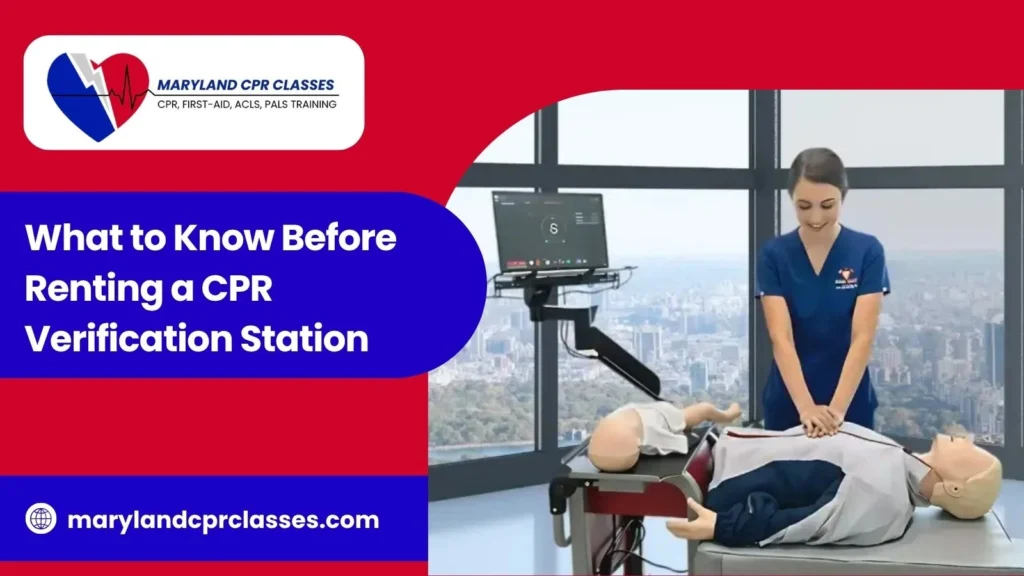
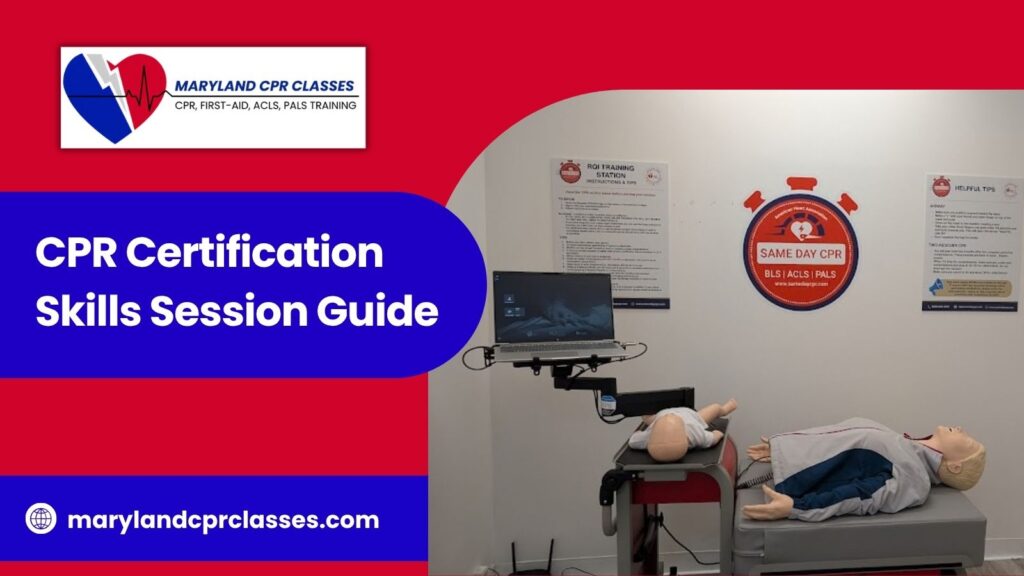
Skills sessions are booked as one-hour appointments, and most Maryland CPR Classes locations are open every day from 7 am to 7 pm, so fitting one in around a shift or a school schedule is usually easy. When you arrive, you’ll use the door access code from your confirmation email to get inside. The CPR Verification Station, a touch-screen computer paired with a Voice-Assisted Manikin and the AED training equipment your course requires, is set up right near the entrance. You’ll log in on the touch screen using the same username and password you used for your online coursework, and the screen takes it from there. If you’ve already completed your online coursework elsewhere or you’re just renewing, you can also book a skills-only appointment instead of the full online-plus-skills session. It’s a low-pressure environment, not a sterile testing room, and you move through it at your own pace rather than waiting on a group class schedule.
The Skills Walkthrough: What You’ll Actually Practice
What you practice depends on your specific course, but the structure follows a similar pattern across Heartsaver, BLS, and other AHA courses.
Adult CPR and AED use comes first in most courses. You’ll practice proper hand placement, compression depth and rate on an adult manikin, and work through a full AED sequence, from recognizing the need for it to applying the pads and following the device’s prompts.
Child and infant CPR follow, since the technique changes based on patient size. Infant CPR in particular uses a different hand position, typically a two-finger or two-thumb technique depending on whether you’re working alone or with a second rescuer, and you’ll practice this directly on an appropriately sized manikin rather than just hearing it described.
Choking relief is usually included as well, covering how to recognize and respond to airway obstruction across age groups.
If you’re taking BLS, ACLS, or another healthcare provider-level course, you’ll also practice two-rescuer CPR, where compressions and ventilations are split between two people working in sync, along with bag-valve-mask ventilation and team-based response skills, like switching roles mid-sequence without losing rhythm.
A CPR Verification Station is self-service, not a classroom with a live instructor standing over you. The Voice-Assisted Manikin and station equipment walk you through each skill with prompts and guided practice before your graded attempt, so you’re never performing a skill cold. You see what’s expected, you practice it at your own pace, and then you complete your tested attempt on the same equipment.
How the Voice-Assisted Manikin Grades You
Your hands-on skills test happens directly on the Voice-Assisted Manikin, which gives you real-time feedback as you work. It tracks your compression depth, rate, and recoil, and tells you directly if your technique needs adjustment, whether you’re compressing too shallow, too fast, or not letting the chest fully recoil between compressions. This isn’t just for grading. It’s genuinely useful feedback that helps you correct small technique issues on the spot as you practice.
Your results are determined by this objective, built-in verification system. There isn’t a separate person standing over your shoulder grading you by eye. The manikin’s tracking is the skills check, which is also why the process moves quickly, since you’re not waiting on a human proctor’s availability.
What If You Don’t Pass on the First Try?
This happens, and it’s not a big deal when it does. CPR is a physical skill, and it’s normal for first-time compressions to be a little too shallow, or for a step to get skipped under the pressure of being tested. If you don’t pass a specific skill on your first attempt, you’ll get direct feedback on what to adjust, and you’ll have the chance to try again. Nobody is sent home without a path to get certified. The goal of the session is for you to leave with the skills down, not to catch you out on a technicality.
How Long Does the Skills Session Take?
Maryland CPR Classes books skills sessions as one-hour appointments, whether you’re completing Heartsaver, BLS, ACLS, or PALS. Since the knowledge portion is already handled through your online coursework, that hour is spent almost entirely hands-on, not sitting through lecture time. It covers your walkthrough, practice, and graded skills test in one visit.
Getting Your Certification the Same Day
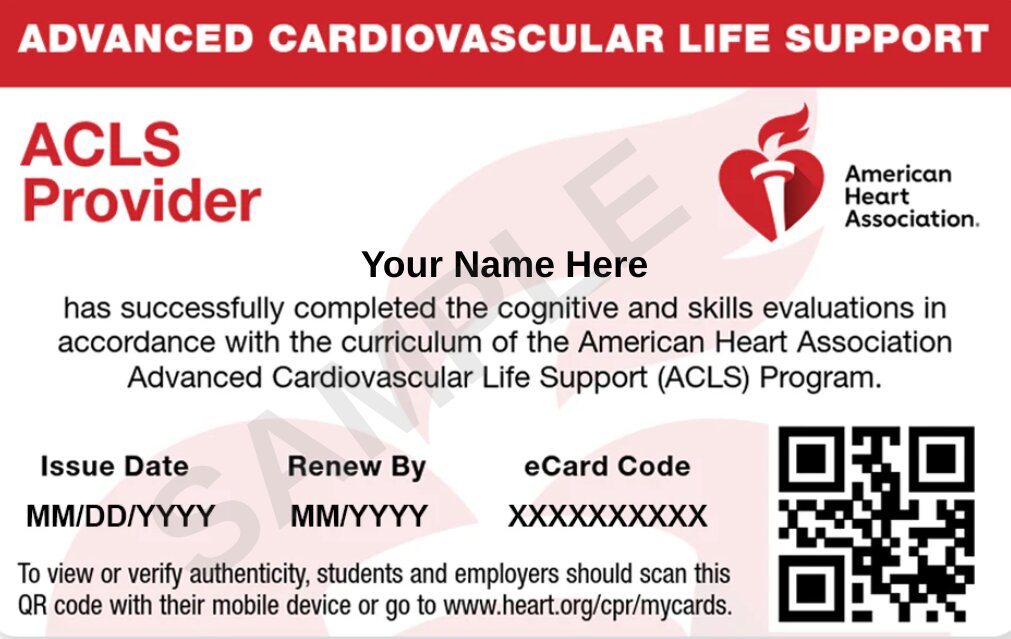
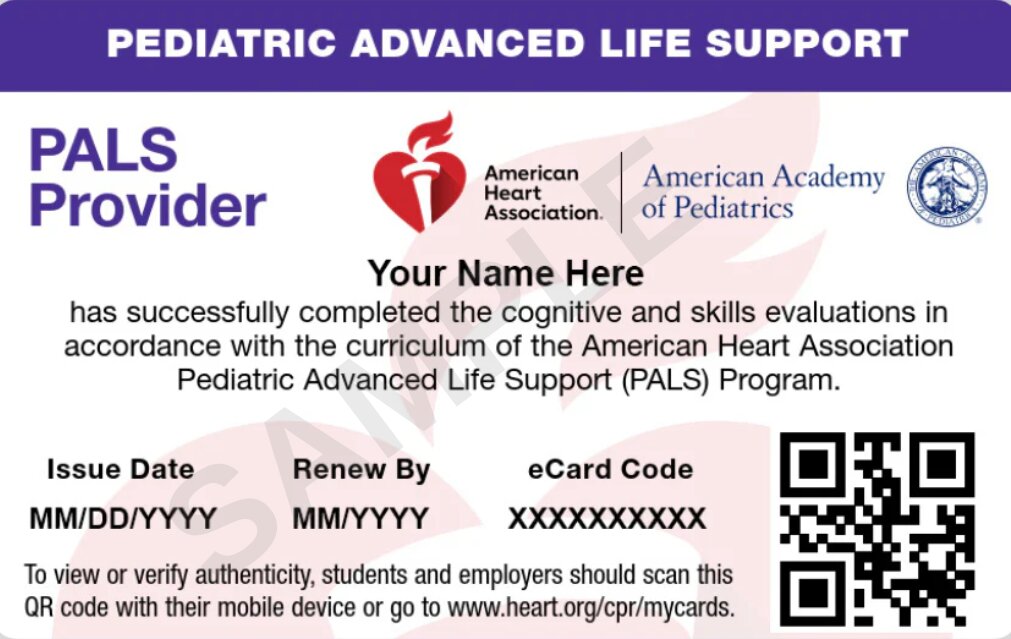
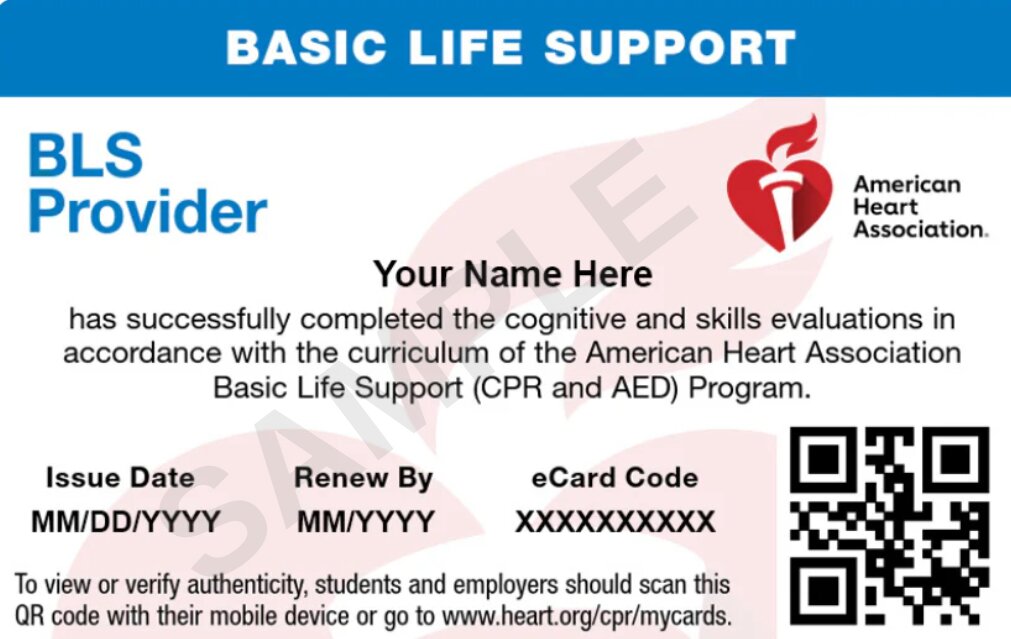
Once you pass your skills test, you don’t have to wait for your certification to arrive later. Maryland CPR Classes issues your official AHA eCard the same day, so you can show proof of current certification to your employer, school, or licensing program right away.
Tips to Feel Confident Going In
A few things that help first-timers specifically:
You don’t need prior experience. The entire session is designed for people who have never done this before, including the walkthrough-then-practice-then-test structure.
Physical exertion is normal, not a sign you’re doing it wrong. Real compressions take more effort than people expect, and feeling tired partway through a test scenario is common, not a red flag.
Use the practice portion fully. The station lets you practice each skill with guided feedback before your graded attempt, so take advantage of that time if anything from the online coursework didn’t fully click.
It’s okay to be a little nervous. Most people are. It doesn’t affect your ability to pass, and the environment is built to be supportive rather than high-pressure.
The Hard Part Is Already Behind You
If you’ve completed your online coursework, the skills session is the part where everything finally clicks into place, not the part to dread. Maryland CPR Classes runs these sessions at self-service CPR Verification Stations across the state, built specifically to walk first-timers through it with real-time feedback, so you leave certified, not stuck.
Frequently Asked Questions
Do I need to practice before my CPR skills session?
No. The session itself includes guided practice before your actual skills test, so you’re never performing a skill for the first time during the graded portion.
How do I get into the CPR Verification Station?
Your confirmation email includes the door access code for your location along with a walkthrough video. You’ll use that code to enter, then log in at the station’s touch screen with the same username and password from your online coursework.
How long does a CPR skills session take?
Sessions are booked as one-hour appointments across Heartsaver, BLS, ACLS, and PALS. Since the knowledge portion is already completed online, that time is spent almost entirely on hands-on practice and testing.
Does the manikin really give real-time feedback?
Yes. Voice-Assisted Manikins track your compression depth, rate, and recoil, and that tracking is what determines your skills test results.