
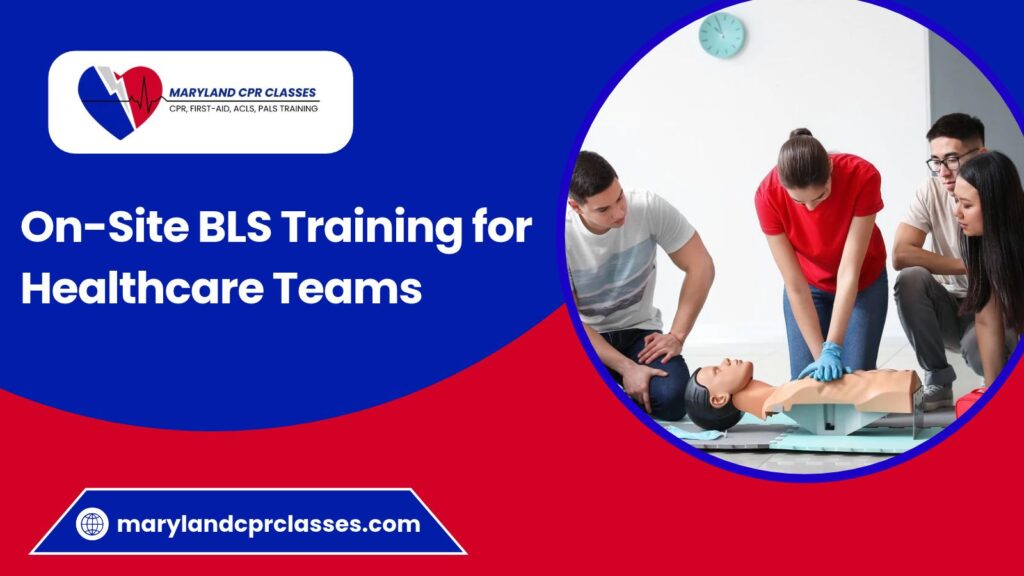
Coordinating BLS certification for an entire healthcare staff is rarely simple. Shifts overlap, patient care can’t pause, and sending nurses, techs, and support staff off-site one at a time eats into schedules that are already stretched thin. On-site BLS training for healthcare teams solves that problem by bringing certification directly to the unit, department, or facility, so staff can renew their credentials without losing hours to travel or waiting rooms.
Maryland CPR Classes works with hospitals, clinics, dental practices, long-term care facilities, and EMS agencies across the state to make BLS certification something that fits into the workday instead of interrupting it. Here’s what on-site training looks like, why it matters for healthcare teams specifically, and how to set it up for your organization.
Why BLS Certification Is Non-Negotiable for Healthcare Staff
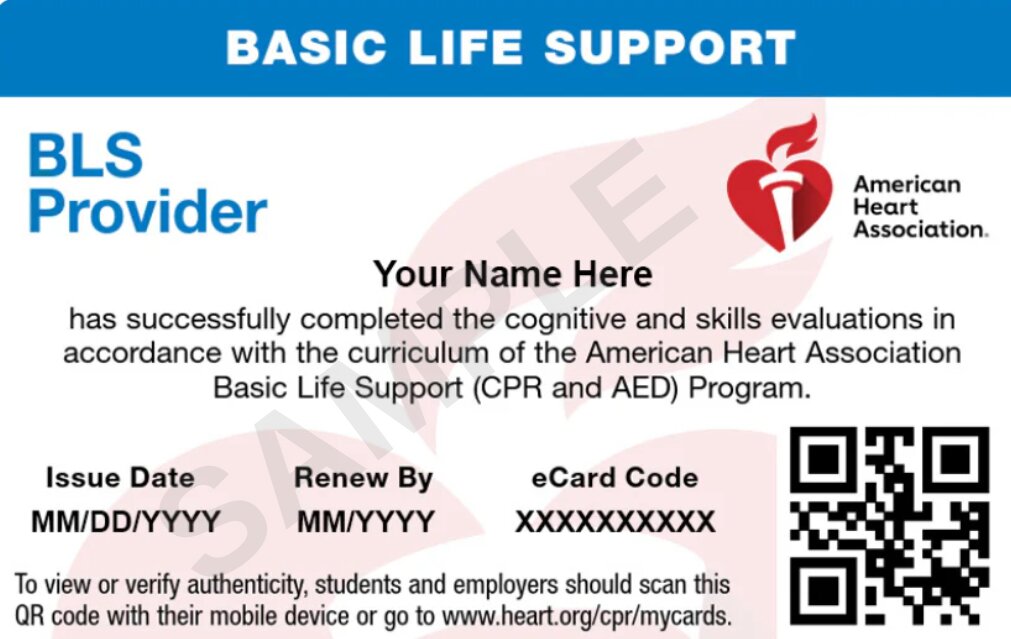
Basic Life Support skills are the foundation every healthcare provider relies on, regardless of specialty. Nurses, medical assistants, physicians, dental staff, and EMTs all need to recognize cardiac arrest quickly, deliver high-quality chest compressions, and operate an AED correctly under pressure. A lapsed certification isn’t just a paperwork issue. It can affect scheduling, licensing, and a facility’s ability to staff shifts safely.
Because BLS renewal is required on a regular cycle, healthcare organizations end up managing certification for dozens or hundreds of employees at once. Handling that one person at a time, through outside classes on random days, creates constant scheduling friction. On-site training removes that friction by consolidating the process into sessions built around your facility’s actual operations.
What On-Site BLS Training for Healthcare Teams Looks Like
Maryland CPR Classes structures on-site BLS training around two components: the knowledge portion and the hands-on skills check.
Self-Guided Learning covers the coursework
Staff complete the cognitive portion of BLS online, at their own pace, before or between shifts. This keeps classroom time short and focused, since employees arrive already familiar with the material instead of sitting through a full lecture.
A CPR Verification Station handles the hands-on check
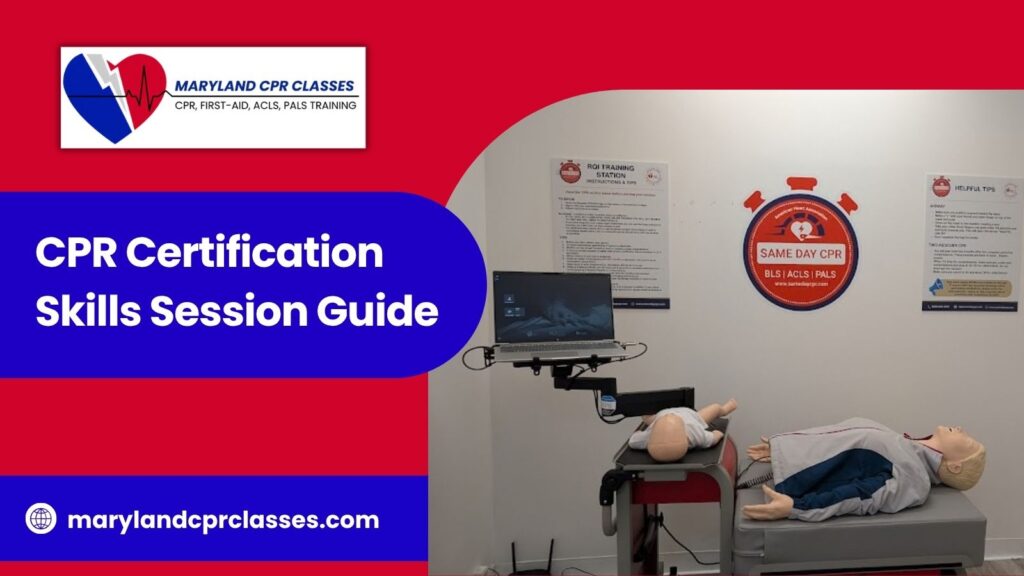
Once the coursework is done, a CPR Verification Station is set up directly at your facility. Staff demonstrate chest compressions, rescue breaths, and AED use on the station, which checks their technique against AHA standards in real time. This is the step that turns Self-Paced CPR Certification into a fully valid credential, since hands-on skills still need to be verified before a card can be issued.
Every station uses a Voice-Assisted Manikin to run the skills check. The manikin gives immediate, objective feedback on compression depth, rate, and recoil as staff practice, so each person can see exactly where their technique needs adjustment without waiting on a second opinion. For healthcare teams that perform CPR under real clinical pressure, this kind of instant feedback builds practical, repeatable confidence.
For organizations that need to certify large groups repeatedly, such as hospital departments with rolling renewal dates, renting a CPR Verification Station is often the most efficient option. The station stays on-site for scheduled sessions, and staff cycle through in small groups without anyone needing to leave the building.
The Advantages of Bringing BLS Training to Your Facility
Less disruption to patient care
Every hour a nurse or tech spends traveling to and from an outside training center is an hour not spent on the unit. On-site sessions keep staff close to their assignments and reduce the need for extra coverage.
Consistent scheduling across departments
Coordinators can group staff by shift, department, or renewal date, instead of managing dozens of individual appointments scattered across different weeks. This makes it far easier to track who’s certified and who’s coming up for renewal.
Training that reflects your environment
Practicing BLS skills in a familiar setting, alongside the coworkers you’d actually be working with during a real emergency, tends to build more practical confidence than a generic classroom across town.
Simplified documentation
When a group certifies together, tracking completion dates, card issuance, and renewal timelines becomes far more manageable than reconciling records from multiple outside providers.
Cost efficiency for larger teams
Group sessions typically reduce the per-person cost of certification compared to booking individual classes, which matters for facilities managing tight training budgets alongside everything else on the calendar.
Who Benefits Most From On-Site BLS Training
On-site BLS training works well for a wide range of Maryland healthcare settings:
- Hospitals and health systems, where large numbers of clinical staff need synchronized renewal cycles across multiple units
- Outpatient clinics and urgent care centers, where stepping away for a full day of off-site training isn’t realistic
- Dental practices, where the entire office often needs certification at once
- Long-term care and skilled nursing facilities, where staff turnover means new hires regularly need initial certification
- EMS agencies and fire departments, where consistent, verified skills checks are part of ongoing readiness
- Medical and nursing schools, where cohorts of students need certification before clinical rotations begin
Facilities in Baltimore, Rockville, Silver Spring, Annapolis, and across Montgomery and Prince George’s counties have all used on-site sessions to keep large staff groups current without the usual scheduling headaches.
Beyond BLS: Supporting the Full Range of Healthcare Certifications
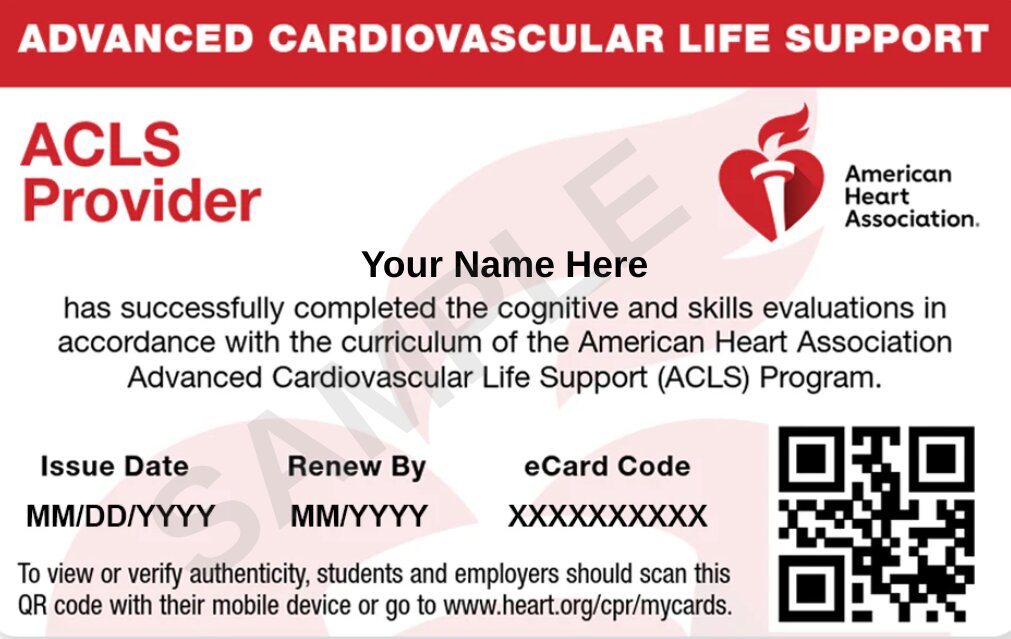
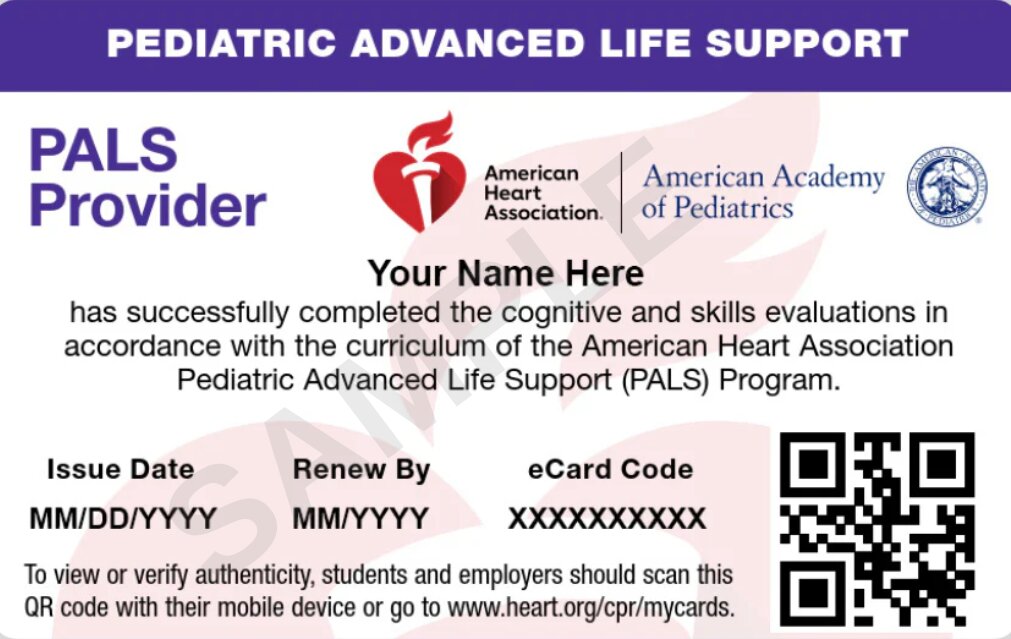
While BLS covers the core skills every healthcare worker needs, some roles call for more advanced training. Maryland CPR Classes also offers ACLS certification for staff managing adult cardiac emergencies and PALS certification for those caring for pediatric patients. These courses follow the same structure as BLS, combining Self-Guided Learning with an in-person skills verification, so facilities can coordinate certification across multiple credential levels in a single visit rather than scheduling separate training days for each course.
This matters for departments like the ICU, ED, and post-anesthesia care units, where staff often need both BLS and ACLS current at the same time. Bundling these sessions together during one on-site visit cuts down on repeated scheduling and keeps the whole team aligned on renewal dates.
How to Set Up On-Site BLS Training for Your Facility
Getting started is straightforward:
- Share your staff count and roles. This helps determine how many sessions and how much equipment your facility will need.
- Identify certification needs. Some staff may only need BLS, while others may need BLS alongside ACLS or PALS.
- Pick dates that work around patient care. Sessions can be scheduled by shift, department, or in blocks that minimize coverage gaps.
- Complete the online coursework in advance. Staff finish the Self-Guided Learning portion before the scheduled skills day.
- Host the in-person skills check. A CPR Verification Station with Voice-Assisted Manikins is set up at your facility so staff can complete their hands-on check and receive certification on-site.
For facilities with ongoing renewal needs, renting a CPR Verification Station on a recurring basis keeps this process running smoothly without having to rebook logistics every cycle.
Keeping Your Maryland Healthcare Team Ready
A healthcare team that’s confident in its BLS skills responds faster and performs better when a real emergency happens. On-site BLS training for healthcare teams takes the logistical burden off facility coordinators and puts certification directly where staff already work, without pulling people away from patients for an entire day.
Maryland CPR Classes provides AHA-aligned BLS, ACLS, and PALS certification through Self-Guided Learning, CPR Verification Stations, and Voice-Assisted Manikins, with on-site scheduling and station rental options built for hospitals, clinics, and healthcare organizations across the state. If your facility needs to certify or recertify a team, reach out to find a schedule that works around your operations, not the other way around.
Frequently Asked Questions
Does on-site BLS training meet AHA standards?
Yes. The coursework follows the same AHA guidelines as any other BLS course, and the hands-on skills check at the CPR Verification Station confirms each person’s technique before a card is issued. Certification carries the same value as a card earned at a training center.
How many staff members can go through on-site training at once?
This depends on how many CPR Verification Stations are on-site and how the sessions are scheduled. Facilities can run staff through in small groups by shift or department, or rent multiple stations for larger teams that need to certify quickly.
Can a facility combine BLS with ACLS or PALS during the same visit?
Yes. Departments that need multiple credentials, such as an ICU or ED, can often coordinate BLS alongside ACLS or PALS certification during the same on-site visit, which cuts down on repeated scheduling for staff who need more than one credential.