
Physical therapists work directly with patients who may have medical conditions, mobility limitations, cardiovascular problems, or other factors that can create an emergency during treatment. Although physical therapy is not an emergency medicine specialty, physical therapists may still need to respond quickly if a patient experiences cardiac arrest, respiratory distress, choking, or another life-threatening event.
So, what CPR certification do physical therapists need?
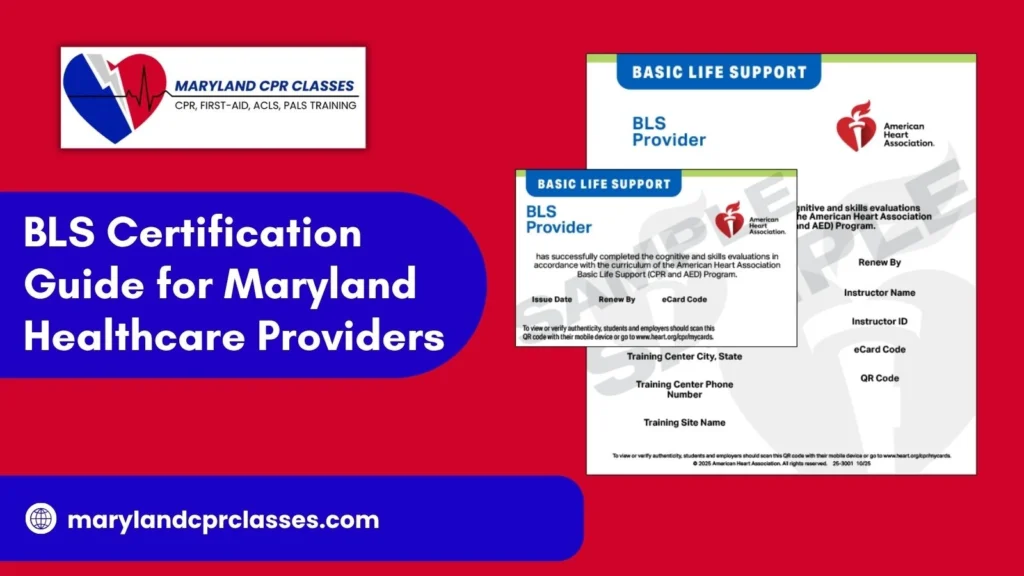
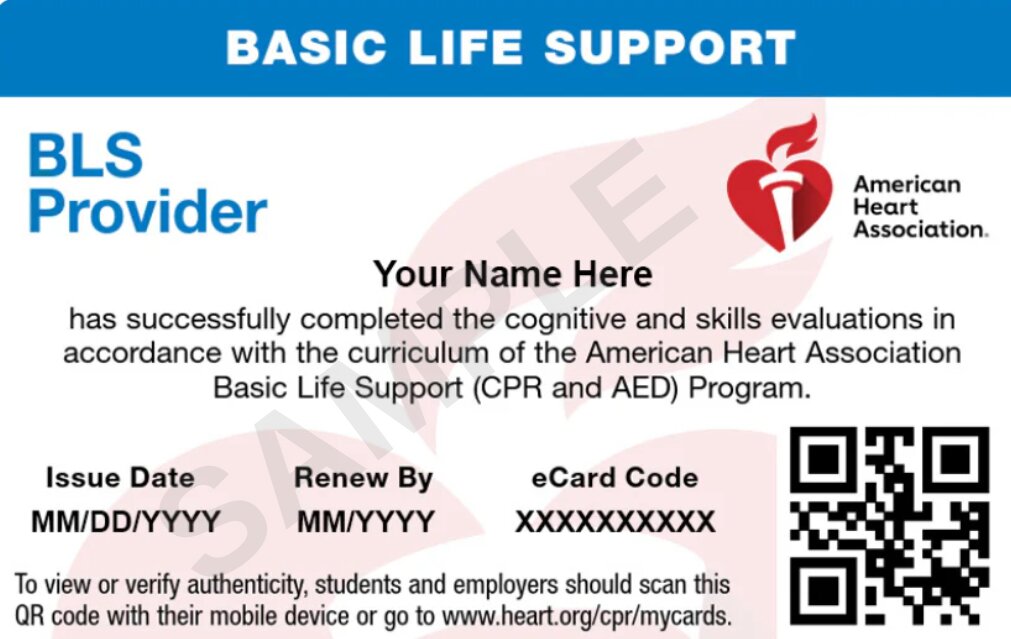
For most physical therapists and physical therapist assistants working in healthcare settings, American Heart Association (AHA) Basic Life Support (BLS) certification is the most appropriate CPR credential. BLS is specifically intended for healthcare professionals who need to perform CPR, use an AED, provide ventilations, and participate in a team response to a cardiac emergency. The AHA currently offers BLS through classroom, blended learning, and Self-Guided Learning formats.
The exact certification requirements can still depend on an employer, clinical facility, school, or specific job. Physical therapists working in higher-acuity environments may also need AHA ACLS certification, while pediatric-focused professionals may need AHA PALS certification.
For physical therapists in Maryland, understanding the difference between these certifications can help you choose the right course without paying for training you do not need.
What CPR Certification Do Physical Therapists Need?
The standard choice for most practicing physical therapists is AHA BLS certification for healthcare professionals.
The AHA BLS course covers the core skills healthcare providers need to respond to life-threatening emergencies. These include high-quality CPR, appropriate ventilations, AED use, choking response, and working effectively as part of a resuscitation team. The current BLS course reflects the AHA’s 2025 CPR and Emergency Cardiovascular Care guidelines.
BLS is particularly relevant to physical therapists because they work in environments where patients can suddenly become unresponsive or experience a medical emergency. A patient may have an unexpected cardiac event during rehabilitation, become unresponsive after exertion, or develop another condition requiring immediate assistance.
An AHA BLS Provider course completion eCard is currently valid for two years. However, physical therapists should always check their employer’s policy to confirm the required certification and renewal schedule.
Why BLS Is Usually the Right Starting Point
BLS is different from a basic CPR course intended for the general public.
Healthcare professionals are trained to respond within a broader clinical environment. The AHA BLS course addresses adult, child, and infant CPR, AED use, ventilation, choking response, and team-based CPR.
That makes BLS a practical choice for physical therapists, PTAs, and healthcare students who need a professional-level CPR credential.
A physical therapist working in an outpatient orthopedic clinic may have different job responsibilities from a therapist working in a hospital or intensive care environment. However, BLS provides the foundational resuscitation skills that apply across many healthcare settings.
Do Physical Therapists in Maryland Need BLS Certification?
Maryland’s physical therapy licensing regulations establish requirements for obtaining and maintaining a physical therapy license, including education, examinations, and other licensing requirements. The Maryland Board of Physical Therapy Examiners does not list AHA BLS certification as a general standalone requirement for obtaining a Maryland physical therapist license.
That distinction is important.
A state licensing requirement and an employer or clinical-site requirement are not necessarily the same thing.
A hospital, rehabilitation facility, outpatient clinic, school, or clinical education program can require healthcare employees or students to maintain current CPR or BLS certification as part of its policies. For example, Montgomery College’s physical therapist assistant program states that students must maintain Healthcare Provider or First Responder CPR certification and notes that its clinical partners prefer AHA training.
Therefore, a physical therapist in Maryland should check the requirements of the specific employer, clinical site, or educational program.
If the position requires healthcare-provider CPR certification, AHA BLS is generally the appropriate course to look for.
BLS vs. ACLS for Physical Therapists
BLS and ACLS serve different purposes.
BLS provides the foundation for responding to cardiac arrest and other immediate life-threatening emergencies. It focuses on CPR, AED use, ventilations, choking response, and effective team participation.
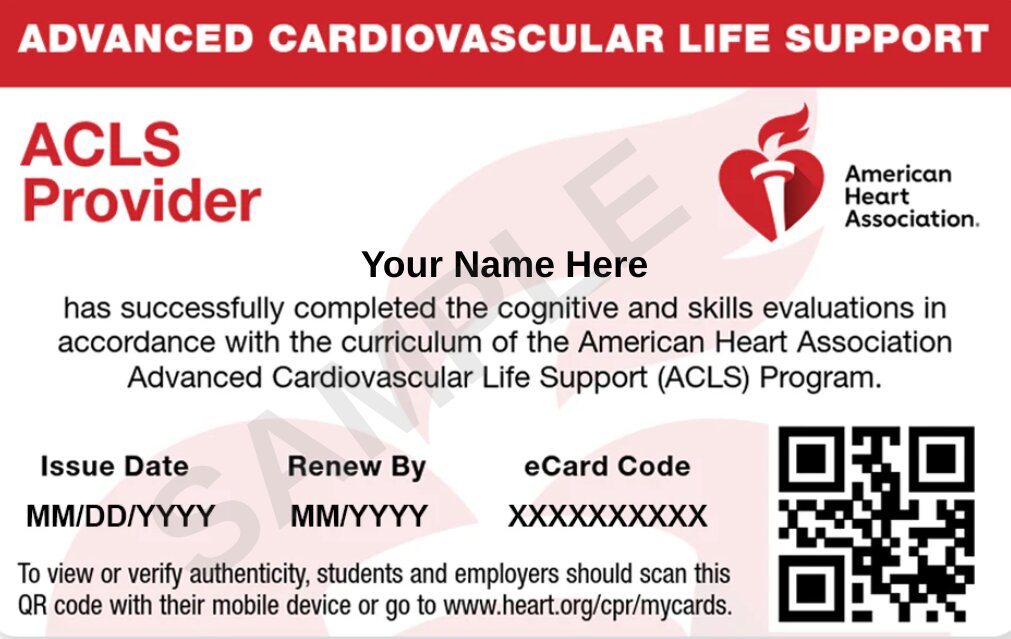
ACLS, or Advanced Cardiovascular Life Support, goes further. It addresses advanced management of cardiovascular emergencies, including cardiac arrest, acute coronary syndromes, stroke, respiratory arrest, and certain abnormal heart rhythms. The AHA identifies ACLS as an advanced course for healthcare professionals who may respond to these emergencies.
For many physical therapists, BLS is sufficient. ACLS may become relevant when the therapist works in a setting where advanced cardiovascular emergencies are more likely or when the employer specifically requires it.
For example, a physical therapist working in:
- An outpatient orthopedic clinic may only need BLS.
- A rehabilitation hospital may need BLS and potentially additional emergency training.
- An acute-care hospital may have additional requirements based on the department.
- A cardiac rehabilitation setting may have stronger reasons for an employer to require ACLS.
- An ICU or other high-acuity environment may require ACLS based on facility policy.
There is no universal rule that says every physical therapist must hold ACLS certification. The appropriate credential depends on the clinical environment and the requirements established by the employer or facility.
If your job posting specifically states that ACLS is required, completing BLS alone would not satisfy that requirement.
Learn more in detail: ACLS vs BLS
Do Physical Therapists Need PALS Certification?
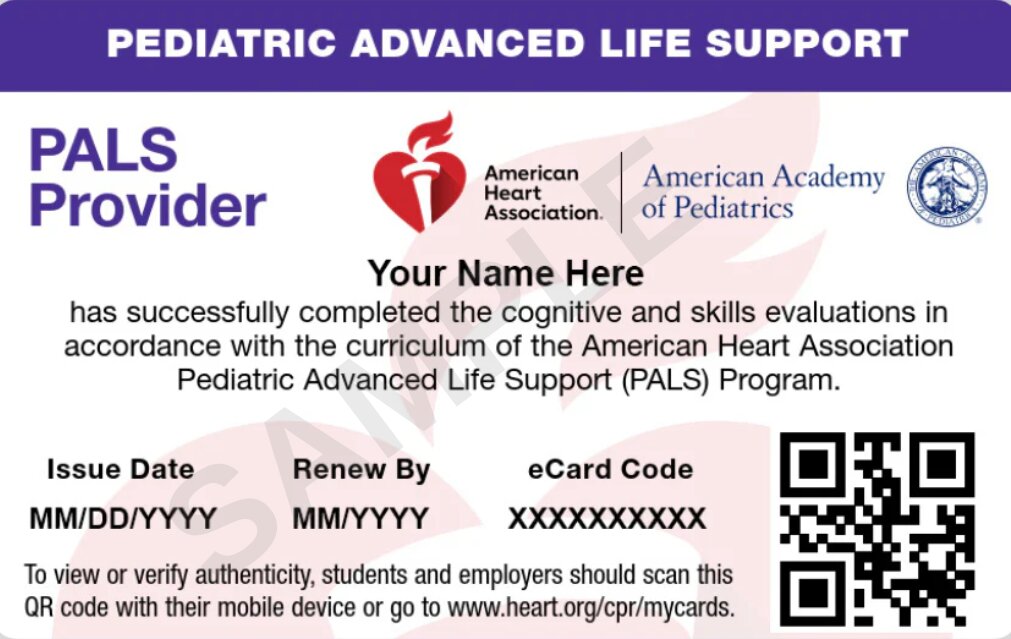
PALS, or Pediatric Advanced Life Support, is intended for healthcare professionals who may respond to emergencies involving infants and children.
A physical therapist who primarily treats adults usually does not need PALS unless the employer or clinical setting requires it.
PALS can be relevant for professionals working with pediatric patients in environments such as:
- Pediatric hospitals
- Children’s rehabilitation centers
- Pediatric outpatient clinics
- Pediatric specialty programs
- Children’s home health services
- Other healthcare settings that care for critically ill or injured children
The AHA offers PALS as a separate advanced course for healthcare professionals who require pediatric emergency training.
For a pediatric physical therapist, the best approach is to check the facility’s credentialing requirements before choosing a course.
Which AHA Course Should a Physical Therapist Take?
The easiest way to choose is to start with your current job requirements.
This table is a general guide, not a substitute for your employer’s credentialing policy.
If your employer says “AHA BLS”, take an AHA BLS course rather than assuming that a general CPR course will meet the requirement.
If your employer specifically requires ACLS, you will need the AHA ACLS course in addition to any BLS requirement they specify.
| Physical Therapy Setting | Common AHA Certification |
| Outpatient physical therapy | BLS |
| Orthopedic rehabilitation | BLS |
| Sports rehabilitation | BLS |
| Skilled nursing or rehabilitation facility | BLS, based on employer requirements |
| Hospital-based physical therapy | BLS, with additional requirements possible |
| Acute-care physical therapy | BLS, ACLS may be required |
| Cardiac rehabilitation | BLS, ACLS may be required |
| Pediatric physical therapy | BLS, PALS may be required |
| Pediatric hospital setting | BLS, PALS may be required |
| High-acuity hospital environment | BLS and potentially ACLS |
The same applies to PALS in pediatric settings.
AHA BLS Self-Guided Learning for Physical Therapists
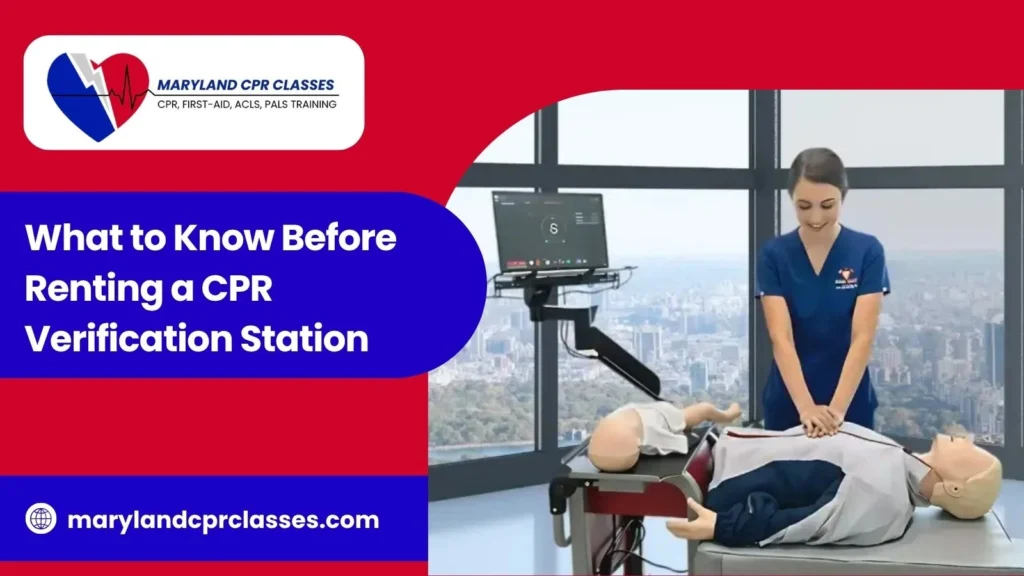
Physical therapists often have busy schedules, making flexible CPR training a practical option. AHA BLS Self-Guided Learning allows healthcare professionals to complete the learning portion online and then complete the required hands-on skills session at a CPR Verification Station.
With Self-Guided Learning, physical therapists can work through the online course at their own pace before attending the hands-on portion. During the skills session, learners demonstrate their CPR skills using a Voice-Assisted Manikin and complete the required skills verification.
This option can be convenient for physical therapists who need to fit BLS certification around patient appointments, clinic hours, school schedules, or other professional responsibilities.
After completing the required course components, learners receive their AHA BLS course completion eCard. For physical therapists whose employer or clinical facility requires AHA BLS certification, Self-Guided Learning provides a flexible way to complete the required training.
What Does AHA BLS Cover?
AHA BLS training goes beyond simply learning how to perform chest compressions.
The course addresses several core skills that healthcare professionals may need during an emergency, including:
- High-quality CPR for adults, children, and infants
- AED use
- Appropriate breaths and ventilations
- Recognition of life-threatening emergencies
- Team-based CPR
- Choking response
- Basic life support concepts
- Effective performance as part of a resuscitation team
The AHA’s current BLS course reflects the 2025 CPR and Emergency Cardiovascular Care guidelines.
These skills can be especially useful for physical therapists because treatment often involves movement, physical exertion, exercise, transfers, and close patient observation.
A therapist does not need to work in an emergency department to encounter a patient who suddenly needs emergency assistance.
How Often Should Physical Therapists Renew BLS Certification?
AHA BLS Provider certification is currently valid for two years.
However, do not wait until your card expires to check your renewal requirements.
Your employer may require certification to remain current throughout your employment. A hospital or clinical facility may also have its own rules for when employees must renew their credentials.
Physical therapists in Maryland should also keep their CPR documentation with their professional records when required by an employer, school, or clinical program.
Maryland separately requires licensed physical therapists to complete continuing education for license renewal. The Maryland Board currently states that physical therapists must complete 30 CE hours during the applicable renewal period, while physical therapist assistants must complete 20 CE hours.
CPR certification requirements and Maryland’s continuing education requirements are separate matters, so completing BLS should not automatically be treated as satisfying all professional CE obligations.
Can Physical Therapy Students Get BLS Certification?
Yes. BLS is also appropriate for students enrolled in healthcare training programs.
The AHA identifies healthcare students among the audiences for its BLS course.
Physical therapy students may need current CPR certification before participating in clinical education, internships, or other patient-care activities. The exact requirement can vary by school and clinical partner.
Students should check their program’s instructions before registering. If the school specifies AHA BLS, make sure the course you select provides the required AHA BLS Provider credential.
Getting BLS certification before a clinical placement can also prevent delays if proof of certification is required before entering a patient-care environment.
Can a Physical Therapy Clinic Rent a CPR Verification Station?
CPR training is not limited to individual healthcare professionals.
Organizations, rehabilitation clinics, healthcare facilities, and other businesses can also arrange CPR training resources for their staff. A CPR Verification Station can support hands-on skills verification for eligible AHA training formats.
For a physical therapy practice with multiple employees who need current CPR credentials, an organization-based training option can make it easier to manage certification across the team.
Clinics can also ask about options for arranging training around operating hours so staff can complete required training without unnecessarily disrupting patient appointments.
Get AHA CPR Certification in Maryland
For most physical therapists, AHA BLS certification is the appropriate CPR credential to maintain for healthcare practice, but your employer or clinical facility may require additional training.
Maryland CPR Classes provides AHA BLS, ACLS, and PALS training for healthcare professionals throughout Maryland. Physical therapists can choose from available training formats based on their certification requirements and schedule, including Self-Guided Learning and CPR Verification Station options.
If you are a physical therapist, PTA, healthcare student, or other healthcare professional in Maryland, check your employer or clinical program requirements first. Then choose the AHA course that matches the credential you actually need.
When in doubt, start with the exact wording of your requirement. If it says AHA BLS, register for AHA BLS. If it specifies ACLS or PALS as well, make sure those additional credentials are included in your training plan.