

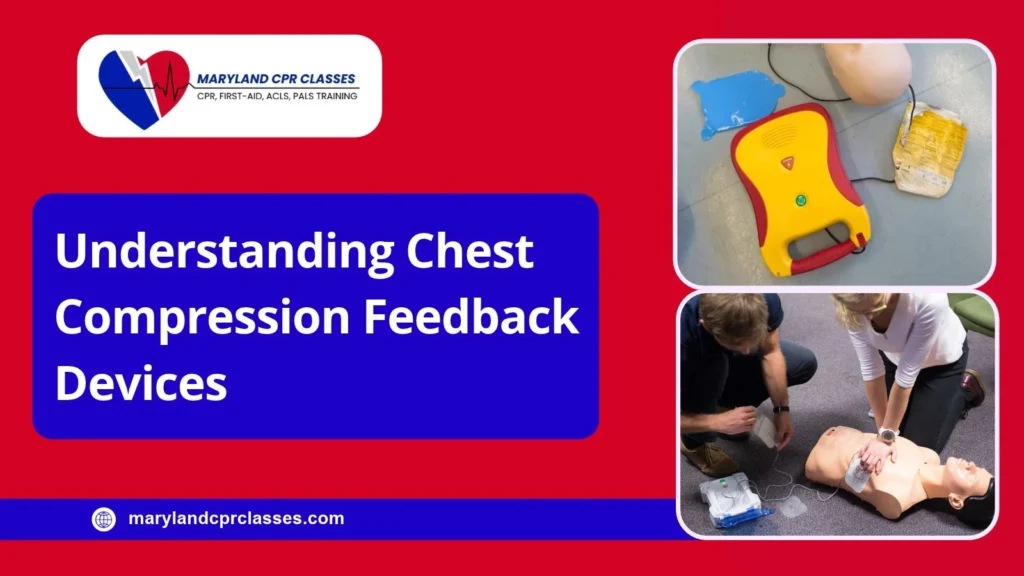
Chest compressions are a vital part of cardiopulmonary resuscitation (CPR). However, performing compressions at the correct rate and depth can be challenging, especially during an emergency or CPR skills assessment. A chest compression feedback device helps rescuers assess their technique by measuring key aspects of CPR performance and providing immediate feedback.
These devices are commonly integrated into CPR training manikins or used as separate monitoring accessories. Depending on the equipment, they can measure compression rate, depth, chest recoil, and other indicators of CPR quality.
Understanding what a chest compression feedback device monitors can help healthcare professionals, CPR students, and other rescuers recognize the components of effective CPR.
What Is a Chest Compression Feedback Device?
A chest compression feedback device is a tool that measures the quality of chest compressions during CPR. It provides real-time audio or visual feedback to help rescuers identify whether their compressions meet recommended performance targets.
For example, a device may display the number of compressions per minute, show whether compressions are deep enough, or indicate when the chest is not returning fully to its normal position between compressions.
Some devices use spoken prompts, lights, digital displays, or other signals to guide the rescuer. Others record performance data that can be reviewed after a training session.
The features vary by device. Not every model measures every aspect of CPR performance.
What Does a Chest Compression Feedback Device Monitor?
A chest compression feedback device can monitor several aspects of CPR technique. The measurements available depend on the equipment being used.
1. Chest Compression Rate
Compression rate refers to how many chest compressions a rescuer performs per minute. The American Heart Association (AHA) recommends a rate of 100 to 120 compressions per minute for adults during CPR.
Compressing too slowly may provide inadequate blood flow, while compressing too quickly can make it difficult to achieve the correct depth and allow full chest recoil.
A feedback device measures the compression rate and may use a metronome, sound, or visual display to help the rescuer maintain the recommended pace.
2. Chest Compression Depth
Compression depth measures how far the chest moves downward with each compression. Adequate depth is necessary to help circulate blood to the brain and other vital organs during cardiac arrest.
For an average adult, the AHA recommends compressing the chest at least 2 inches (5 cm) while avoiding depths greater than 2.4 inches (6 cm).
A chest compression feedback device measures how deeply the rescuer presses the chest. If the compressions are too shallow or too deep, the device may provide an alert or display the measurement so the rescuer can adjust their technique.
The appropriate compression depth differs for infants and children, so rescuers must follow the guidance for the patient’s age and size.
3. Chest Recoil
Chest recoil refers to the chest returning to its normal position after each compression. Full recoil allows the heart to refill with blood between compressions.
If a rescuer continues leaning on the chest between compressions, the chest may not fully recoil. This can interfere with blood returning to the heart and reduce the effectiveness of CPR.
Some feedback devices detect incomplete recoil and alert the rescuer to reduce pressure between compressions.
The goal is to compress the chest effectively and release pressure completely after every compression.
4. Hand Position
Correct hand placement helps ensure that compressions are delivered to the appropriate area of the chest.
For adult CPR, rescuers generally place the heel of one hand in the center of the chest on the lower half of the breastbone, or sternum, and place the other hand on top.
Some advanced CPR training systems can detect hand position and indicate whether the rescuer needs to adjust placement. However, hand-position monitoring is not available on every feedback device.
Correct positioning is important because compressing the wrong area can reduce the effectiveness of CPR and increase the risk of injury.
5. Chest Compression Fraction
Chest compression fraction (CCF) refers to the percentage of the total resuscitation time during which chest compressions are being performed.
Frequent or prolonged pauses reduce the time spent delivering compressions. These interruptions can affect blood flow during resuscitation.
Some CPR feedback systems and defibrillator monitors calculate or display compression fraction. This information helps resuscitation teams assess how consistently compressions are being delivered.
The AHA identifies minimizing interruptions as an important component of high-quality CPR. Its high-quality CPR resource lists a chest compression fraction greater than 80% as a performance metric.
Not every basic feedback device measures compression fraction directly.
6. Compression Consistency
Some CPR systems provide information about compression performance over time. This may help rescuers and instructors identify whether the rate, depth, or recoil changes during a practice session.
For example, a learner may begin compressing at the correct depth but gradually become less effective because of fatigue. Reviewing the feedback can help identify this change and highlight areas for improvement.
The information available depends on whether the equipment provides real-time measurements, session summaries, or detailed performance reports.
Why Are Chest Compression Feedback Devices Important?
CPR requires rescuers to maintain an appropriate compression rate and depth, allow complete chest recoil, and minimize interruptions. These tasks can be difficult to perform consistently without feedback.
A chest compression feedback device provides objective information about CPR technique rather than relying only on visual observation or personal judgment.
Its main benefits include:
- Immediate correction: Rescuers can adjust their compression rate, depth, or recoil as soon as the device identifies a problem.
- More consistent practice: Feedback helps learners repeat the correct technique during CPR training.
- Clear performance assessment: Instructors can use recorded measurements or device indicators to identify areas that need improvement.
- Skills assessment support: Feedback can help learners understand whether their compressions meet the required performance criteria during practice and testing.
- Greater awareness of CPR quality: Rescuers can better recognize the difference between performing compressions and performing them effectively.
The AHA recommends feedback devices during CPR training for both healthcare professionals and lay rescuers. The devices support learning, but they do not replace proper training or the need to follow current CPR guidelines.
How Are Chest Compression Feedback Devices Used in CPR Training?
Chest compression feedback devices are commonly used with CPR manikins during BLS, ACLS, and other CPR training courses.
During a practice session, the learner performs chest compressions while the device measures available performance indicators. The system may display the compression rate and depth, provide audio prompts, or indicate whether the chest is returning fully between compressions.
The learner uses this information to adjust their technique and practice again. Instructors can also use the feedback to identify common mistakes and provide additional guidance.
Some systems provide a summary of the learner’s performance at the end of the session. This allows the learner to review areas that need improvement before completing a skills assessment.
For example, a learner may maintain a rate of 110 compressions per minute but fail to compress deeply enough. The feedback helps identify that specific problem instead of giving only a general assessment of the learner’s performance.
Are Chest Compression Feedback Devices Used in AHA BLS and ACLS Training?
Yes. Feedback devices are used in AHA CPR training to help learners develop and assess their compression technique.
In BLS training, learners practice CPR skills and focus on essential components such as compression rate, depth, and complete chest recoil.
ACLS training builds on these foundational skills and includes advanced management of cardiac arrest and other cardiovascular emergencies. Effective chest compressions remain an important part of resuscitation.
The equipment used depends on the training center and course setup. Some manikins have feedback technology built in, while others use separate devices or monitoring systems.
A feedback device supports the practice and assessment process, but learners must also demonstrate the other required course skills.
Does a Chest Compression Feedback Device Monitor Heart Rhythm?
Not necessarily. A chest compression feedback device primarily measures the quality of chest compressions, not the patient’s heart rhythm.
Heart rhythm is assessed using an electrocardiogram (ECG) or an appropriate cardiac monitor. During cardiac arrest, trained healthcare providers use rhythm assessment to determine whether a shock is indicated and guide other resuscitation decisions.
Some defibrillators combine cardiac monitoring with CPR feedback features. In those systems, the device may provide information about both the heart rhythm and compression performance.
However, these are separate functions. A basic chest compression feedback device should not be assumed to monitor heart rhythm, oxygen levels, blood pressure, or other vital signs unless its specific features support those measurements.
What Is the Difference Between a CPR Feedback Device and a CPR Manikin?
A CPR manikin is a training model used to practice chest compressions, rescue breaths, and other CPR skills. A feedback device measures aspects of the learner’s performance while the learner practices on the manikin.
Some manikins contain built-in sensors and feedback systems. Others require an external device or accessory to measure compression quality.
For example, a basic manikin may allow learners to practice hand placement and compressions without displaying detailed measurements. A feedback-enabled manikin may provide immediate information about compression rate and depth.
The main difference is that a manikin provides the practice surface, while the feedback technology measures performance. In many modern training systems, both functions are combined in one unit.
Can a Chest Compression Feedback Device Replace CPR Training?
No. A feedback device is a training aid, not a replacement for CPR education or skills assessment.
Although it can identify certain problems with compression technique, it cannot independently teach every aspect of CPR. Learners still need to understand when CPR is required, how to respond to an emergency, how to use an automated external defibrillator (AED), and how to perform other skills included in their course.
Feedback also varies by equipment. A device may not detect every error or measure every component of CPR quality.
Formal CPR training helps learners develop the knowledge, practical skills, and decision-making abilities needed to respond appropriately to cardiac arrest.
Get Trained in CPR With Maryland CPR Classes
Understanding what a chest compression feedback device monitors is one part of learning how to perform high-quality CPR. Practical training gives learners an opportunity to practice compressions, receive feedback, and demonstrate the required skills.
Maryland CPR Classes offers American Heart Association (AHA) BLS, ACLS, and PALS training for eligible learners. With Self-Guided Learning, participants complete the online coursework before attending the required hands-on skills session using the training equipment provided.
Choose the course that matches your professional requirements and complete the required training and skills verification to earn your AHA eCard.
Frequently Asked Questions
What are the main measurements of a chest compression feedback device?
The main measurements are usually chest compression rate and depth. Depending on the device, it may also monitor chest recoil, hand position, and chest compression fraction.
Can a feedback device tell whether CPR is effective?
It can measure selected aspects of CPR quality, such as compression rate and depth, and help rescuers improve their technique. However, its readings do not independently confirm that CPR is producing adequate blood flow or guaranteeing a successful outcome.
Are CPR feedback devices required during training?
The AHA recommends using feedback devices during CPR training for healthcare professionals and lay rescuers. The equipment and setup depend on the course and training center.