
Healthcare professionals and first responders need CPR skills they can rely on. The same is true for many teachers, childcare providers, workplace employees, and anyone whose job requires American Heart Association (AHA) certification. One of the first decisions you’ll make before enrolling in a course is choosing the training format that works best for you.
Today, Maryland students have more flexibility than ever. Alongside traditional instructor-led classes, many AHA courses are available through Self-Guided Learning using a CPR Verification Station and a Voice-Assisted Manikin. Both options lead to the same nationally recognized certification when completed through an authorized AHA Training Center, but the learning experience is different.
If you’re unsure which option fits your schedule, learning style, or workplace requirements, this guide explains how each format works and what to expect from BLS, ACLS, and PALS certification courses in Maryland.
What Is Instructor-Led CPR Training?
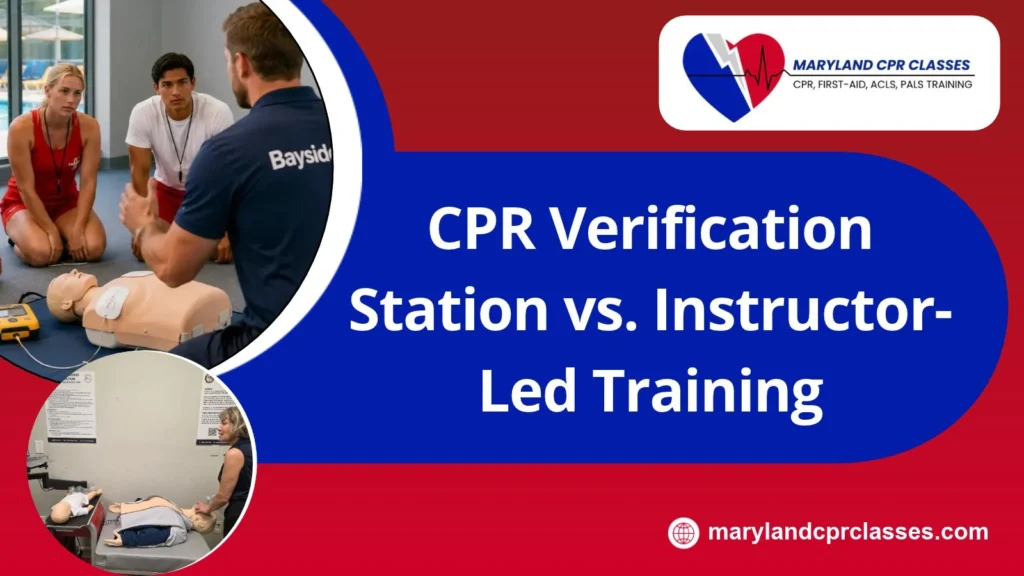
Instructor-led training is the traditional classroom format that many healthcare professionals are familiar with. Students complete the course under the guidance of an AHA-certified instructor who explains key concepts, demonstrates CPR techniques, and provides immediate feedback during hands-on practice.
These courses usually combine classroom instruction, skills practice, and testing into one scheduled session.
Instructor-led classes are ideal for students who:
- Prefer learning in a classroom environment
- Like asking questions throughout the course
- Benefit from live demonstrations
- Want instructor feedback while practicing CPR skills
- Feel more comfortable learning with a group
During the course, instructors evaluate chest compressions, rescue breaths, AED use, and emergency response techniques while helping students correct mistakes before completing the skills assessment.
What Are CPR Verification Stations?
A CPR Verification Station offers a modern approach to completing the hands-on portion of an AHA certification course.
Instead of practicing with a live instructor, students first complete the required online coursework at their own pace. After finishing the online portion, they schedule a short in-person skills session using a Voice-Assisted Manikin.
The manikin provides real-time guidance during the assessment by measuring important CPR performance indicators such as:
- Compression depth
- Compression rate
- Chest recoil
- Hand placement
- Ventilation quality
As you perform each skill, the system gives immediate feedback so you know exactly what needs improvement before successfully completing the assessment.
Once all required skills are completed successfully, your certification process is complete.
This learning format is commonly referred to as Self-Guided Learning or Self-Paced CPR Certification because students control when they complete the online education before attending their scheduled skills session.
How Self-Guided Learning Works
Many students assume Self-Guided Learning means teaching yourself CPR without any guidance. That isn’t the case.
The learning process follows a structured format created by the American Heart Association.
The typical process looks like this:
Step 1: Complete the Online Course
Students work through interactive lessons, videos, and knowledge checks from home or anywhere with internet access.
Because the coursework is self-paced, you can pause and resume whenever your schedule allows.
Step 2: Schedule Your Skills Assessment
After completing the online learning, you’ll book a convenient appointment at a Maryland CPR Verification Station.
Unlike traditional classes, there is no need to wait for a scheduled group session.
Step 3: Complete the Hands-On Skills Session
Using a Voice-Assisted Manikin, you’ll demonstrate the required CPR skills for your course.
The technology measures your performance in real time and provides clear prompts throughout the assessment.
Most students complete this portion much faster than a traditional classroom session.
Step 4: Receive Your Certification
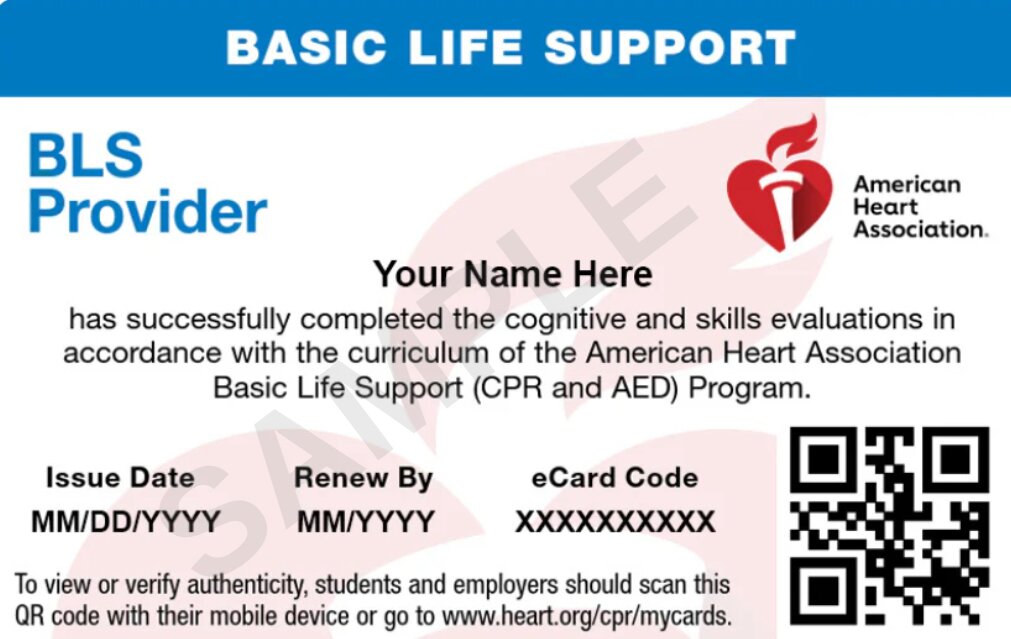
After successfully completing all required course components, you’ll receive your official American Heart Association course completion eCard.
Courses Available Through CPR Verification Stations
Not every CPR course follows the same curriculum, but many healthcare certifications are available through Self-Guided Learning in Maryland.
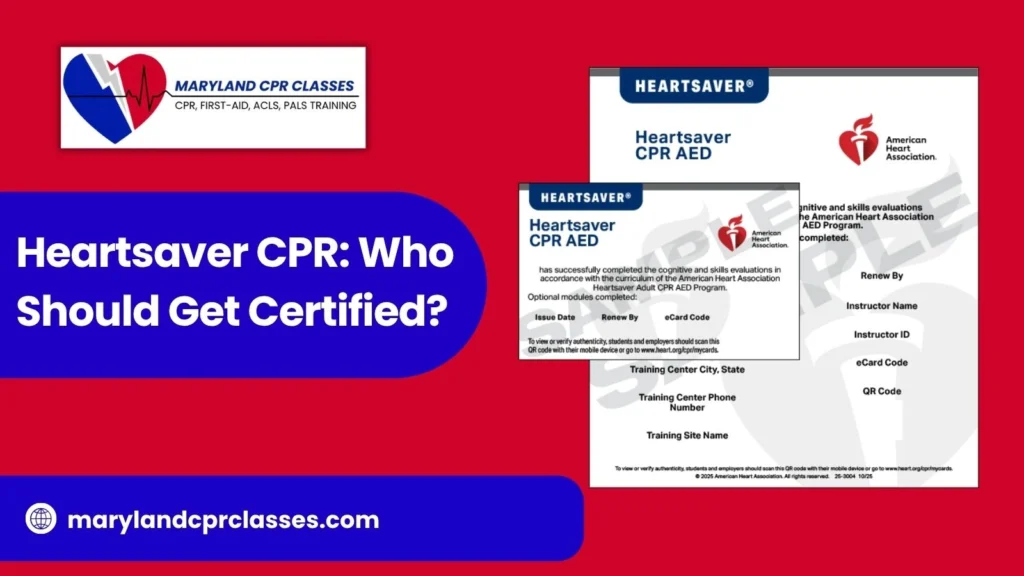
Heartsaver CPR AED
Heartsaver CPR AED is designed for individuals with little or no medical training who need CPR certification for work, school, or personal preparedness.
Students learn how to:
- Perform high-quality CPR for adults, children, and infants
- Use an automated external defibrillator (AED)
- Recognize and respond to cardiac and breathing emergencies
- Provide care until emergency medical services arrive
Heartsaver First Aid CPR AED
Heartsaver First Aid CPR AED combines first aid training with CPR and AED instruction for workplace safety and emergency preparedness.
Students learn how to:
- Perform CPR and use an AED for adults, children, and infants
- Provide first aid for common injuries and illnesses
- Control severe bleeding and manage wounds
- Respond to burns, fractures, sprains, and other medical emergencies
- Recognize life-threatening situations and activate emergency response
Basic Life Support (BLS)
BLS is intended for healthcare professionals who respond to medical emergencies in hospitals, clinics, emergency departments, dental offices, and other healthcare settings.
Students learn how to:
- Perform high-quality CPR
- Use an AED
- Work as part of a resuscitation team
- Respond to adult, child, and infant emergencies
- Manage choking situations
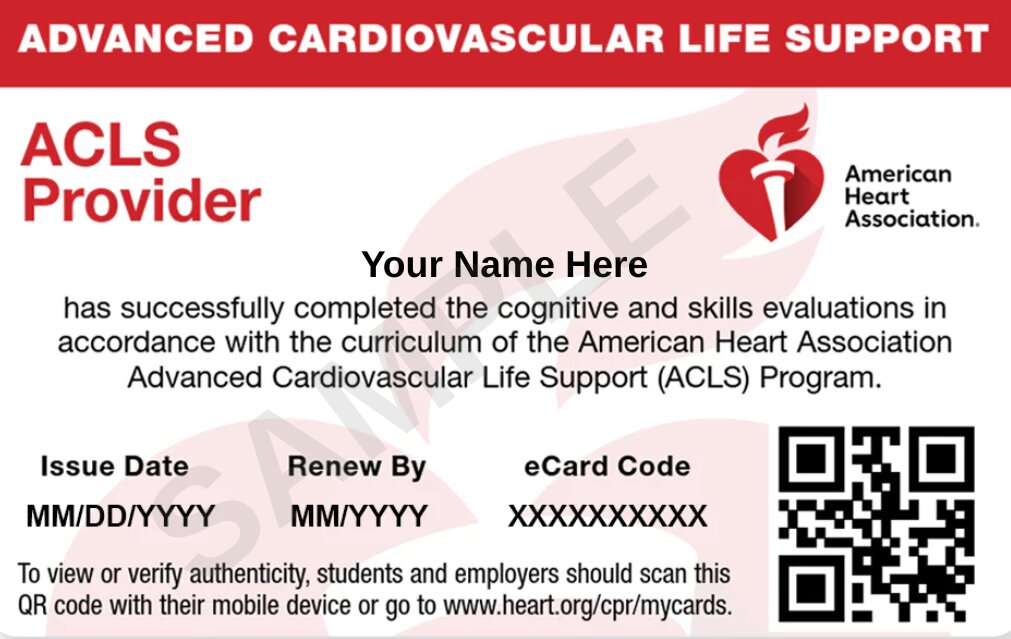
Advanced Cardiovascular Life Support (ACLS)
ACLS expands on Basic Life Support by covering advanced emergency response techniques used by healthcare professionals.
Topics include:
- Cardiac arrest management
- Airway management
- Team dynamics
- Recognition of life-threatening cardiac rhythms
- Post-cardiac arrest care
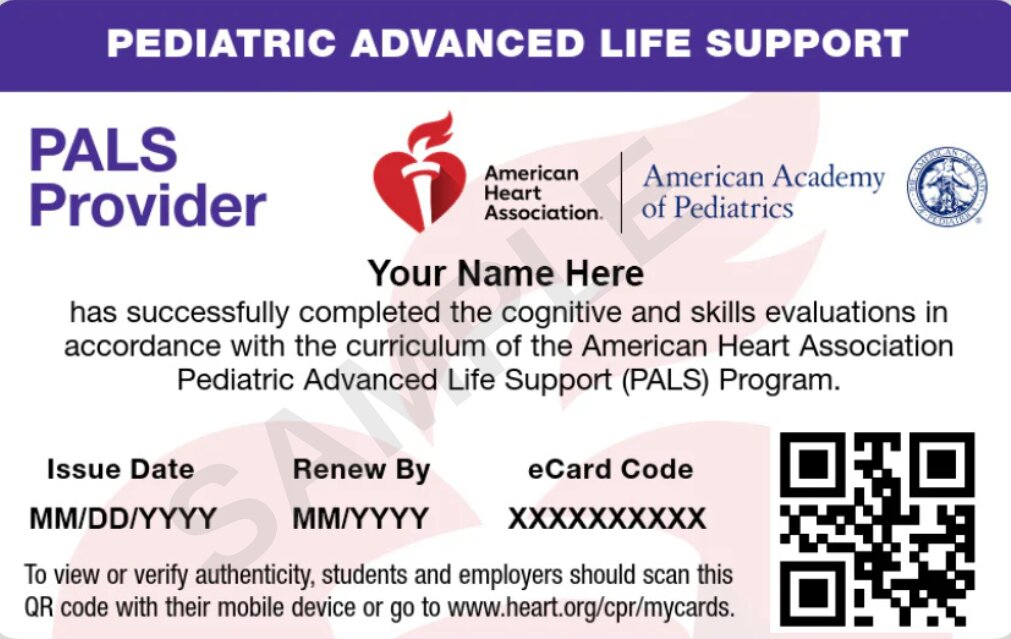
Pediatric Advanced Life Support (PALS)
PALS focuses on emergency care for infants and children.
Students practice recognizing respiratory emergencies, shock, and pediatric cardiac arrest while learning age-specific assessment and treatment techniques.
All the above courses can be completed using the blended learning format when offered through an authorized AHA Training Center.
Instructor-Led Training vs. CPR Verification Stations
Both learning formats teach the same lifesaving skills and follow American Heart Association standards. The biggest differences involve how you learn, how much scheduling flexibility you have, and the amount of instructor interaction during the process.
Instructor-Led Training vs. CPR Verification Stations
Although both options meet American Heart Association requirements, the learning experience is quite different. Understanding these differences can help you choose the format that best fits your schedule, confidence level, and workplace expectations.
| Feature | Instructor-Led Training | CPR Verification Station |
| Learning Format | Classroom with an instructor | Self-Guided Learning with online coursework and a short skills session |
| Schedule | Fixed class dates and times | Flexible scheduling for online learning and skills assessment |
| Skills Feedback | Provided by an instructor | Real-time feedback from a Voice-Assisted Manikin |
| Learning Pace | Set by the instructor | Learn at your own pace |
| Class Size | Group classes | Individual skills assessment |
| Hands-On Assessment | Instructor evaluates performance | Technology measures CPR performance |
| Best For | Students who prefer live instruction | Busy professionals seeking flexibility |
Regardless of the format you choose, you’ll learn the same core CPR skills and receive an official AHA course completion eCard after successfully completing all course requirements.
Which Training Option Is Best for Healthcare Professionals?
Healthcare workers often have demanding schedules that make it difficult to attend a full-day classroom session. Shift work, overnight hours, and changing schedules can make flexibility an important factor when renewing certifications.
Self-Guided Learning has become a popular option because students can complete the online coursework whenever it fits their schedule. The in-person skills assessment is typically much shorter than a traditional classroom course, allowing healthcare professionals to spend less time away from work.
This option works well for:
- Registered nurses
- Physicians
- EMTs
- Paramedics
- Respiratory therapists
- Medical assistants
- Nursing students
- Hospital staff
Healthcare professionals who already have CPR experience often appreciate the convenience of refreshing their knowledge online before completing the hands-on assessment.
On the other hand, professionals who are taking BLS, ACLS, or PALS for the first time may feel more comfortable in an instructor-led class where they can ask questions and receive live coaching throughout the course.
Which Option Is Better for First-Time CPR Students?
If you’ve never taken a CPR class before, it’s natural to wonder if Self-Guided Learning will provide enough support.
The answer depends on your learning style.
Some students learn best by watching videos, reviewing information at their own pace, and practicing independently before completing the skills assessment. Others prefer having an instructor nearby to explain techniques, answer questions, and demonstrate proper hand placement.
Instructor-led training may be a better choice if you:
- Learn best through face-to-face instruction
- Want immediate answers to your questions
- Feel nervous about performing CPR for the first time
- Prefer practicing with classmates
Self-Guided Learning may be ideal if you:
- Prefer studying independently
- Have previous CPR experience
- Need a flexible schedule
- Want to avoid spending several hours in a classroom
Neither option is better than the other. Both are effective and follow the same AHA training standards.
Why More Maryland Students Are Choosing CPR Verification Stations
As healthcare education continues to evolve, many students are looking for training that fits into their busy lives without compromising quality.
CPR Verification Stations offer several practical advantages.
Greater Scheduling Flexibility
Instead of waiting for a scheduled classroom session, students can complete the online portion whenever it’s convenient and book a skills assessment that works with their calendar.
Learn at Your Own Pace
Everyone learns differently. Some students prefer moving quickly through familiar topics, while others like to spend more time reviewing challenging material. Self-Guided Learning allows you to progress at a pace that’s comfortable for you.
Objective Skills Assessment
The Voice-Assisted Manikin measures CPR performance using standardized criteria such as compression depth, rate, recoil, and ventilation quality. This provides consistent, immediate feedback throughout the assessment.
Shorter In-Person Visit
Because the educational portion is completed online, the in-person appointment focuses only on demonstrating the required hands-on skills. This can reduce the amount of time spent away from work or other responsibilities.
Can Businesses and Healthcare Organizations Use CPR Verification Stations?
Yes. CPR Verification Stations are not only useful for individual students but also for organizations that need to certify multiple employees.
Hospitals, medical practices, dental offices, nursing homes, fire departments, schools, universities, and large employers often need an efficient way to keep staff certifications current.
Organizations can also rent CPR Verification Stations for workplace training programs. This allows employees to complete their skills assessments on-site while maintaining consistent training standards across the organization.
For businesses with rotating shifts or large teams, this approach can reduce scheduling challenges and minimize time away from daily operations.
Choosing the Right CPR Course in Maryland
When deciding between instructor-led training and a CPR Verification Station, consider a few simple questions:
- Is this your first CPR certification?
- Do you prefer learning independently or in a classroom?
- Do you need a flexible schedule?
- Are you renewing an existing certification?
- Does your employer require a specific training format?
Answering these questions can help you select the option that matches your experience, learning preferences, and work schedule.
Both instructor-led classes and Self-Guided Learning provide high-quality education and prepare students to respond confidently during real-life emergencies.
Conclusion: Instructor-Led Training vs. CPR Verification Stations for BLS, ACLS, and PALS Courses in Maryland
Choosing between Instructor-Led Training vs. CPR Verification Stations comes down to your learning preferences, experience, and schedule. Both formats follow American Heart Association standards and teach the same essential lifesaving skills required for BLS, ACLS, and PALS certification.
If you value face-to-face instruction and live coaching, an instructor-led class may be the right fit. If you need greater flexibility and prefer learning at your own pace, Self-Guided Learning with a CPR Verification Station offers a convenient alternative without compromising the quality of your training.
At Maryland CPR Classes, you can choose the training format that works best for you while earning an official AHA course completion eCard recognized by employers throughout Maryland and across the United States. Whether you’re certifying for the first time, renewing your credentials, or arranging workplace training for your team, you’ll have access to flexible scheduling, high-quality instruction, and trusted AHA-compliant certification.
Frequently Asked Questions
Is a CPR Verification Station accepted by employers?
Yes. When you complete your course through an authorized American Heart Association Training Center, the certification you receive is the same official AHA course completion eCard accepted by employers nationwide.
Do I still practice CPR during Self-Guided Learning?
Yes. While the educational content is completed online, you’ll still demonstrate all required CPR skills during your in-person assessment using a Voice-Assisted Manikin.
Can I complete BLS, ACLS, and PALS through Self-Guided Learning?
Yes. Many authorized AHA Training Centers in Maryland offer BLS, ACLS, and PALS through a blended learning format that combines online coursework with an in-person skills assessment.
How long does the skills assessment take?
The hands-on portion is generally much shorter than a traditional classroom course because you’ve already completed the educational component online. The exact time depends on the course and your familiarity with the required skills.