
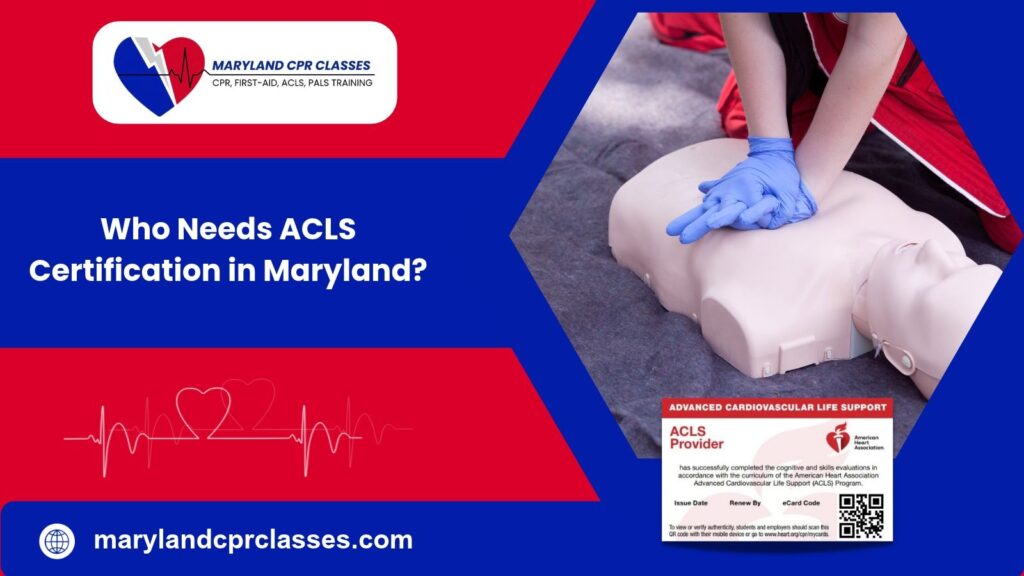
ACLS is not a harder version of CPR. It is a different kind of training, built for clinicians who will be on the team when a patient’s heart stops or becomes unstable, and who are expected to interpret the rhythm, choose treatments, and direct or support the response. That difference is what decides who needs ACLS certification in Maryland.
Unlike BLS, which most hospital staff hold, ACLS is usually tied to where you work and what you are expected to do during an emergency, not to your job title alone. Two nurses with the same license can have different requirements because they work on different units. This guide walks through the settings where ACLS is expected, how to tell whether it applies to you, what you need to know before you enroll, and how to time it.
The Deciding Question: Will You Be on the Code Team?
An ACLS requirement follows responsibility. If your role puts you at the bedside of monitored patients, on a code or rapid response team, or in charge of emergency care in the field, an employer will almost always ask for ACLS. If your role is to start CPR and call for help until the team arrives, BLS is usually the standard.
The AHA built the ACLS Provider course for healthcare professionals who direct or take part in the management of cardiac arrest and other cardiovascular emergencies. Where BLS teaches you to deliver high-quality compressions, ventilations, and AED use, ACLS adds rhythm recognition, defibrillation and cardioversion, airway management, resuscitation medications, and the early management of acute coronary syndromes and stroke. It also trains you to work as a team member or team leader during a resuscitation.
Where ACLS Is Usually Expected
Most requirements come from the employer or the unit, so use the settings below as a map rather than a rulebook.
Monitored hospital units: Intensive care, emergency departments, cardiac and telemetry units, step-down units, and cardiac catheterization labs commonly require ACLS for nurses, physicians, advanced practice clinicians, and respiratory therapists assigned there. Patients in these areas can deteriorate quickly, so the people caring for them are expected to recognize unstable rhythms and respond.
Code and rapid response teams: Clinicians who are assigned to respond to in-hospital emergencies, including pharmacists, anesthesia providers, and respiratory therapists on some teams, are often required to hold ACLS even if their regular unit would not ask for it.
Advanced life support EMS: Paramedics in Maryland are licensed through the Maryland Institute for Emergency Medical Services Systems (MIEMSS) and provide advanced life support under statewide medical protocols. ACLS is central to that work, but the specific card requirement is set through MIEMSS rules, the EMS medical director, and the employing agency, so confirm the current wording with your operational program.
Sedation and anesthesia settings: Dental practitioners who provide moderate or deep sedation, and clinicians working in procedural or ambulatory surgery settings, should check the permit and credentialing rules that apply to them. Advanced life support training is often part of sedation credentialing, but the requirement varies, so confirm it with the Maryland State Board of Dental Examiners or your facility.
Where BLS Is Usually Enough
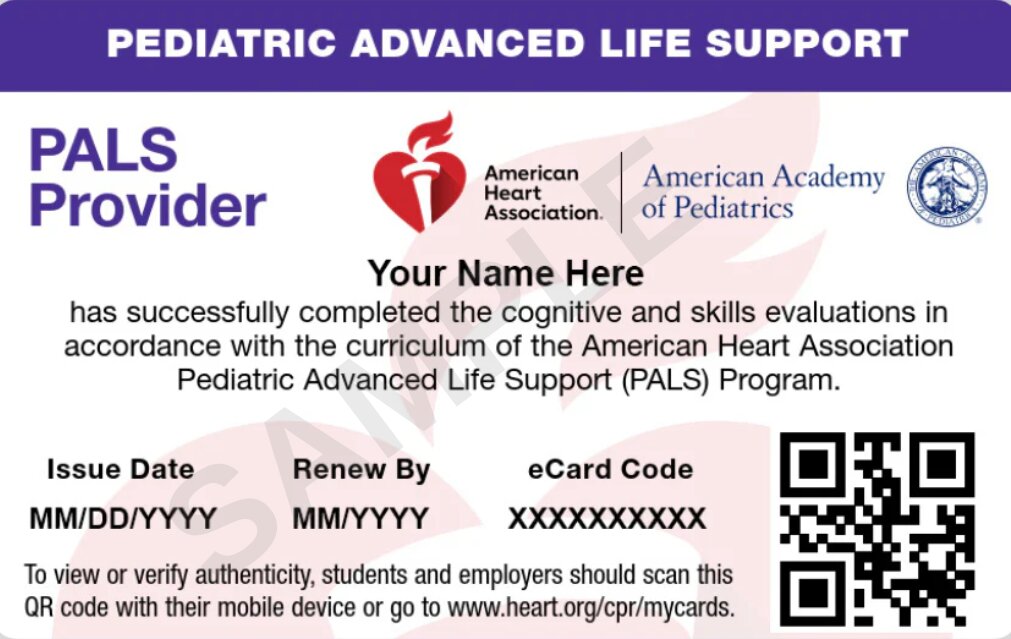
Medical-surgical floors, outpatient clinics, long-term care, physical therapy, and administrative healthcare roles more often ask for BLS. Teachers, coaches, and workplace responders are generally better served by a Heartsaver course, because ACLS assumes clinical training and a scope of practice that includes advanced interventions. Clinicians who care mainly for children may need PALS instead of, or alongside, ACLS.
Are You Ready for ACLS?
Readiness is the most common reason people struggle with this course. The AHA expects ACLS students to be proficient in three areas before they begin: performing high-quality BLS, reading and interpreting electrocardiograms (ECGs), and understanding ACLS pharmacology. The course reinforces these skills but is not designed to teach rhythm recognition or resuscitation drugs from scratch.
The AHA offers an online pre-course self-assessment that covers rhythm recognition, pharmacology, and practical application. It is the quickest way to find out whether you are ready, and it is worth taking before you pay for the course. The skills testing includes high-quality BLS and a simulated cardiac arrest scenario known as a megacode, where you demonstrate team dynamics and treatment decisions.
If you are a student or new graduate and your unit has not asked for ACLS yet, there is no benefit to rushing. Build your ECG and pharmacology foundation first, and certify when the requirement is real.
Timing Your ACLS Certification
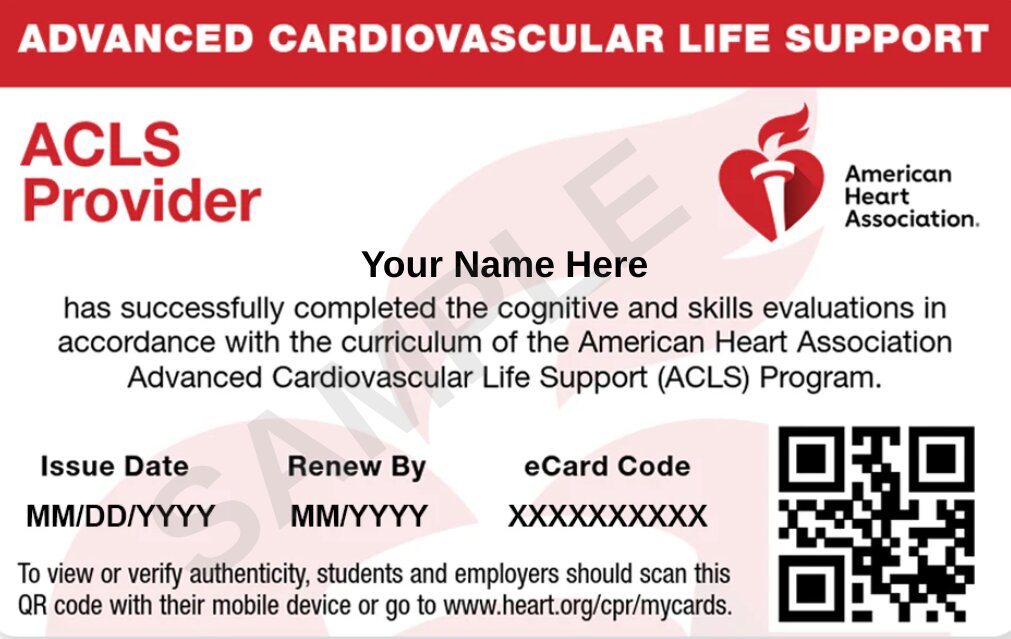
An ACLS card is valid for two years. Plan around three dates: the date your employer needs the card, the date you can finish the online coursework, and the date your skills session is available. Starting the online portion early gives you room to repeat the self-assessment if your ECG knowledge needs work. For renewals, aim to finish before the date printed on your card, since renewal courses generally expect a current card and policies on lapsed ones differ by provider and employer.
Getting ACLS Certification at Maryland CPR Classes
Maryland CPR Classes, powered by Same Day CPR, offers the AHA ACLS course for both initial certification and renewal. You complete HeartCode ACLS online through Self-Guided Learning, then finish your hands-on skills session at a CPR Verification Station on a Voice-Assisted Manikin, with unlimited attempts until passing. You receive an AHA course completion eCard when both parts are complete.